Sports : FEMALE vs MALE

By: Hena Patel. Source: INDIANFOLKS, Google photos.

Today we see so many people voicing out their opinions on many issues, however not many people discuss about gender bias in sports.

India achieved her independence decades ago and we boast of having come a long way ahead. However, our mentality and thinking has not changed much. The best example for this statement is the situation of sports in India. The most important question that we need to ask is whether women sports players in India are given the importance that they deserve. There is a very prominent bias in our attitude to sportswomen and gender based discrimination is invariably practised in our country. Although, as a country, we have produced many world famous sportswomen who are doing really well in their professions by winning so many medals for our country, they are not given enough attention. The gender discrimination in this field is higher when compared to any other field. It is indeed a state of pity that we cannot even name the female athletes who represent our country and give us recognition on the world map.

Often, sportsmen achieve more respect and fame than women who play the same sport, in spite of them doing equally well. For instance, Virat Kohli is the captain of the men’s Indian cricket team and Mithali Raj is the captain of the women’s Indian cricket team, the latter person also happens to be the first person to score a double hundred in women’s cricket and yet not many of us are aware about this. The gender bias in our sports is so evident that, Virat Kohli is the brand ambassador of many companies like Puma and Colgate, whereas Mithali Raj does not get the same recognition.

In India, Hockey world suffers too. The inequality widens when we see a minimum of 10-fold wage gap between the two genders’ salary when it comes to national sports.


In Squash, India’s best female squash player Dipika Pallikal made headlines when she refused to play in the squash nationals, protesting against the unequal rewards on offer for male and female players. Male winner’s prize money was fixed at Rs 1,20,000, while the female winner would only get Rs 50,000. Unfair? Yes, it is! Dishonourable? Yes, it is! Coloured? Yes, it is!

The above mentioned link ride us to a closer look at the hurdles women face in their journey of becoming a Pro Athelete.
Credits:- Vitamin Stree [ YouTube ]

Of all the challenges women face in sports, wage gap is the most predominant as is seen from the above figures. According to a report, in India, the gender pay gap across all sectors is 25%. It is sad to note that till recently, BCCI did not even provide job security to the woman cricketers where the guys had their salaries running to several lakhs and sometimes even crores! Finally in 2016, women cricketers were granted central contract even though the lucrative amount is lesser compared to what male cricketers get, it is a progress nonetheless.

It is a pity that we do not recognise when Indian women are making their presence felt everywhere. While we speak of equality in corporate spaces, we should not be ignoring the same in the sports field too.

Millions definitions, one word.

by- Aarya vyas, Aditi

A fine day in October, Mr. Tripathi, the owner of Radhe-Shyam residential society, hosted a party in the premises to celebrate the completion of a “peaceful” year of the society. The residents of the society barely knew each other as everyone was new to this area of Mumbai and was still adjusting to the life in a metro. People being as punctual as they could be, started gathering around an hour after the party was supposed to begin. As time passed by, clear groups of men and women seemed to form, one near the food-court and the other beside the garden respectively.

While the men started to bond over their food preferences and love for Sachin Tendulkar, women on the other side of the society sat silently on the chairs with cold drinks in their hands and a smile on their face. This is when Shaina, a rebellious and outspoken young lady in her mid-20s dressed up in shorts and an oversized t-shirt, felt the urge to begin a conversation by introducing herself as a free-lancer who worked for various radio stations and news channels as a content writer. Mid-way through her introduction, she looked at one of the woman sitting on the other side of the circle, with most part of her face covered in burkha and continued in a boastful yet sympathetic manner about how she has a Facebook page that empowered women to dress the way they felt like and that proclaimed that religion and society could not oppress a woman by asking her to dress in a particular way.

 Even after being the most introvert person one could ever meet, Asma felt the need to jump in and contradict the underlined message of Shaina. Asma very boldly protected her identity and beliefs and said that it was her own choice to be judged by the society on the basis of her personality and not on her physical attributes. She believed that people, and especially men, have the tendency to form a perspective about a woman on the basis of her looks and clothes. She believed that wearing a burkha and covering her face broke the stereotype of the society which asserted the idea that men are all about their intellectual abilities and women are all about beauty. Choosing to wear a burkha obligated the society to look at what she had to say over how she looked.

Thinking of the heating debate that this Segway could turn into, Madhu, a house-maker and a mother of two beautiful 10 year olds started talking about how amazing it felt after giving birth to her kids and how not being preoccupied with anything else gave her all the time in the world to look after her kids whom she loved so dearly. She could barely stop talking about how fulfilling it was to be the emotional backbone of a whole family and to get all the love and respect from the in-laws and your family itself even after not being able to contribute much financially due to lack of complete education.

Out of the blue, a woman sitting quite at a distance from everyone pulled her chair closer to the circle and introduced herself as Swara. She was a confident working woman in her mid-30s who always took stand against the unjust. She was in a constant turmoil as she agreed strongly to the idea of having financial freedom and loved the job she did, but at the same time she couldn’t bare the differences in the wages of the male and female counter parts working at a same level at her office. Her in-laws acted as a “cherry on the top” by forcing her to leave the job and have babies and take care of the house.

Swara couldn’t stop herself from judging Madhu for being financially dependent on her husband as for her a person’s financial freedom defined them, forgetting how a woman could be the bonding agent of a whole family and yet be empowered and hold a respectful position in the society. Swara also was ready to shoot all the misogynistic statements towards Shaina for what she wore and how she hanged out in the night, forgetting that the definition of being a feminist for Shaina was to do as she pleased. Nevertheless, Swara had her sympathies with Asma as she condemned how the societal and religious norms had gotten into her head and how she forgot her basic human rights, again, forgetting that a woman has all the rights to follow and practice any religion that she felt like.

Image result for lipstick under my burkha marriage scenes

While the bolts in Swara’s head were moving, there came a huge laugh for the group of men. Curious as they were, the group of woman sitting in sheer awkwardness by now asked the men what the joke was about. A man, in tears by now shouted “Mr. Sharma just shared a meme on how he feels like an insect in Bear Grylls hands when his wife drives a car.” After a moment of silence, all the woman got up from their chairs and went back home with a smirk on their faces. At least that’s what the expressions appeared to be through the veil that I wore while I was cleaning the dishes at a distance from the gathering. I have to work double time to educate and feed my children well since my left my husband who used to snatch my earnings away to keep his belly full of alcohol.                                                                                                                      

Gender Neutral India – A Dream

By: Khushi Rawat & Arushi Singh

“PATRIARCHY MEANS ‘DOMINATION’, EITHER OVER THE OTHER SEX OR ANY RACE, CLASS, CASTE, RELIGION.”

-Subair Kalathil, WSRC

Women have been the bearer of its fruit since ages. Women are considered as the weaker section and subordinate to the men. She is exploited, degraded, violated and discriminated both in the homes and outside world.

However, this wasn’t the case in ancient India; an Indian woman was synonymous to the words like “maata” (mother) or “devi” (goddess) in the Vedas and Upanishads.

Marriage was never forcibly imposed on women in Rig Vedic society. After puberty and the completion of their education, girls had permission to take up married life by selecting their life partners through swayamvara (choosing a husband). The Ṛig Veda has disclosed the existence of both polygamy and polyandry during the early Vedic period. Remarrying was also socially acceptable for widows; however, divorce was not permitted. Women even had the right to take part as debaters in public assemblies.

 Special attention to the female’s priority and satisfaction during sex has been markedly observed in Vātsyāyana’s Kāmasūtra. In the Rig Vedic civilization, prostitutes, were never considered to be undignified or shameful, rather female sex workers were depicted as classy women, without societal restrictions. Arthaśāstra, emphasized over the legal position of prostitutes during the Rig Vedic period.

But, as the time passed the position of women underwent changes in all spheres of life. In the Vedic period, women lost their political rights of attending assemblies. Child marriages also came into existence. In the ‘Aitareya Brahmana’, a daughter is described as a source of misery. During the period of Smritis, women were bracketed with the Shudras and were denied the right to study the Vedas, to utter Vedic mantras and to perform Vedic rites. Marriage or domestic life became compulsory for women and unquestioning devotion to husband was their only duty.

 The Brahmanical law did not allow any property rights to women; the provision for “stridhana” does not extend beyond the wife’s rights to jewels, ornaments and presents given to her at the time of her wedding.

Remarriage of widows was generally not favored. Their situations were very bad as they had to shave their heads, discard all their ornaments and eat only plain food and wear white clothes. They were generally not invited to witness any social functions.

After the World War II, one of the issues which had attracted the attention of the policy makers and social scientists was gender issue. And hence, various laws were made for the upliftment of women and other genders in India.

 “INDIANS ARE MORE OPEN TO HOMOSEXUALITY THAN WE THINK”

-Subair Kalathil, WGRC

It is common to walk hand in hand in public with the same sex people than with the opposite sex. It is even easier to rent a room when there are two females rather than any heterosexual pair. Indians are falsely accused of discriminating homosexuals! (*sarcasm*)

This isn’t just the case with modern India, even in earlier times; India was very much acceptable of the homosexual behavior. In the temples of ‘Khajuraho’ (temple of love; in Madhya Pradesh), there are images of women erotically embracing other women and men displaying their genitals to each other, there are even positive depictions of same-sex activities in the 2000 year old ‘Kama Sutra’. Scholars have generally explained this as an acknowledgement that people engaged in homosexual acts.

India’s government, Hindu nationalist coalition led by the Bharatiya Janata Party, has indicated it will support the Supreme Court in its ruling of decriminalizing Article 377 (1861- British era law), but will oppose any attempts by activists to push for further rights. Gay people in India are currently not allowed to marry, adopt children or inherit their partner’s wealth should they die. What they don’t know, is that their own scriptures accepted homosexuality:

In the Valmiki Ramayana, Lord Rama’s devotee and companion Hanuman is said to have seen Rakshasa women kissing and embracing other women.

The Mahabharata has an interesting story about Shikhandini, the feminine or transgender warrior of the time and responsible for the defeat and killing of Bhishma. Shikhandini was bestowed with manhood during night as she was married to a woman. Shikhandini henceforth became Shikhandi and lived like a hermaphrodite. According to Mastya Purana, Lord Vishnu took the form of a beautiful woman, Mohini to trick the demons. Meanwhile, Lord Shiva saw Vishnu as Mohini and instantly fell for him. Their union led to the birth of a child — Lord Ayyappa.

India as a whole is a very culturally and traditionally inclined society. We believe in holding onto our roots. When our culture embraces homosexuality as something normal, then why can’t we?

Source Prompts:[https://content.sciendo.com/view/journals/mgrsd/23/3/article-p180.xml?lang=en]

[https://www.indiatoday.in/india/story/10-instances-of-homosexuality-among-lgbts-in-ancient-india-1281446-2018-07-10 ]

[ https://www.nbcnews.com/feature/nbc-out/decriminalization-gay-sex-sets-cultural-battle-conservative-india-n907571 ]

[https://www.nbcnews.com/feature/nbc-out/decriminalization-gay-sex-sets-cultural-battle-conservative-india-n907571]

[Seminar by Subair Kalathil]

GENDER STEREOTYPES IN BOLLYWOOD.

by-Nakul chavda,Divya deshmukh

GENDER STEREOTYPES IN BOLLYWOOD : 

IMG_8367.jpeg

Imange source-Google

Bollywood is undoubtedly one of the largest digital content creating industry in the world. Although movies made here have always been a subject of some or the other gender biases which women or the female protagonist face. The platform which entertains and creates an impact to such a large mass of public shouldn’t have any bias, and particularly gender bias because it has been a subject of matter from decades. Women had fought for equal pay, equal right, and even for the right to vote, we do not want this to continue in the entertainment industry.

IMG_8368.jpeg

Image source-Google

Movies made in the recent times are still male dominated and in disguise promote violence towards women. The most talked about movie “Secret Superstar” is the best example for it. The protagonist’s father is seen violent towards her mother and is seen hitting her multiple times.The dominance is not always physical but emotionally and mentally too, “the father used to take all the major decisions in the family and therefore as seen crushes his daughters dream to be a singer”. There are many more examples in the industry. “Bhaag Milkha Bhaag” This biopic of Indian ace runner Milkha Singh takes us to the time of independence and we still can see that how women used to suffer, the makers added that part to the content without taking in account that it might promote violence against women.From the role in the movie to the pay-cheques everywhere in bollywood there is a bias against women. Male dominance in the industry has made female lead to just be there to fulfill the glamour element, male dominance can seen in every major film from “Andhadhun” to “Happy New Year” every hit movie has a male dominance.Women are apparently shown as side character in every major film.

IMG_8371.jpeg

Image source-Google

It is based in the mind-set of the people about women that after marriage or later having a baby she cannot work neither can handle home at the same time, as the children and the home needs to be taken care of because it’s a women’s job and males cannot do it.

For instance, in a movie like War there were two protagonist Hrithik Roshan and Tiger Shroff and the role portrayed by Vaani Kapoor was very minimal also did not give any base to the script, most of the people considered her for only an item song. Whereas in Chhapaak, Deepika Padukone was in lead but it does not suppressed the role of Vikrant Massey. Hereby the good content is necessary to teach the new generation about gender sensitivity and gender equality.

IMG_8372.jpeg

Image source-Google

There are many movies which presents the gender inequality as well as biasness. Where women are treated as an object to get more attention, always playing the victims in major bunch of it and men are shown as heroes, saviours and in dynamic roles. In movies like Grand Masti, Kabir Singh, Sultan and many more where women are the inferior ones who always want someone to protect them to take care of them. But now it’s the time for people to come up from the item songs and six pack abs. Issues like pre- mature balding (Gone Kesh, Bala), racism (Bala), queer people(LGBTQIA) who are not anymore considered guilty for what they are(Ek Ladki Ko Dekha To Aisa Laga , Subh Mangal Zyada Saavdhan), awareness regarding women’s hygiene (Padman) are brought up forward in the society through movies. These movies are building up the pioneers for the upcoming generation and as well for the current generation to modify the way of thinking towards gender issues. 

IMG_8377.jpeg

Image source-Google

The script writing and the plot should now cover more and equal roles for both men and women. The movie industry should positively contribute towards the society to improve the situation on ground. Good content can neutralise the difference between male and female performers and can get equal opportunities to showcase their skills.It is one of the most influential platforms in India which can practically improve the thinking and mind-set of every individual. Also, movies like Thappad, Chhapaak had been worked like a boon to women. Many women who were stepping back are now coming up with their problems which will bring courage and seeking of ray into the clouds.

IMG_8378.jpeg

Image source-Google

YES MEN TOO !!

                                 Sources : Google images , Wikipedia

At present if a man files a complaint against a woman for committing offenses like rape, domestic violence, stalking, sexual violence, she goes scot-free as the 158 year old Indian Penal Code (IPC) believes only men can commit such a crime. In this time we are thinking about the protection of women from sexual violence and we have enacted a number of laws for them. What about the protection of males and boys? How can we protect their dignity and respect from the attack of sexual assault and domestic violence?

Indian men facing domestic violence at the hands of wife or female partner is a harsh reality. However, no one including our government has taken any stand on addressing it.In most countries across the globe, the laws against domestic violence provide protection to both men and women. Men can also seek restraining orders from courts, which restrain the abusive partner or wife from perpetrating abuse and even contacting the victim. Whereas in India, family violence against men is almost legal as there is no provision in the law to protect a man, who faces violence from wife or other female family members. There are uncountable cases where a husband has been abused, tortured by wife or female partners in connivance with her own family or relatives or even friends. Many times the violence is so brutal that the husband or the male partner suffers extreme injuries, which results in loss of life. 

Most abused men in India run away from their abusers and apply for divorce, because they are either afraid of losing access to their children or they are afraid of getting implicated in false cases of dowry harassment. They also fear for huge financial losses and long drawn legal process. This could be the prime reason when male suicides rate is much higher than the female suicide rates as 4966 for males and 4049 for females under the various age groups sharing in the category of marriage related issues,love affairs etc. As there is a lot of social stigma towards men abused by women.  Most of the male victims do not come out in open and do not share their ordeal with family, friends or colleagues. Male victims of domestic violence are ridiculed and considered as unmanly. Such thinking is chauvinistic and it is harmful.

Like men, a female partner also tends to bring the stress of the workplace to the home. This is one of the main reasons of domestic violence against men. The other reasons include intolerance and anger at non-fulfilment of expectations. Sometimes, incapability of husband to meet monetary demands of wife also leads to abuse and violence. Male victims of family violence go through low self-esteem and their performance at workplace suffers. Thousands of such men are approaching psychiatrists, who are not of much help, when a law to provide protection to men and restrain the women does not exist.

The surveys conducted throws light on unprovoked violence against men by women is evidence in the face. Notwithstanding the fact that double the numbers of men commit suicide compared to women, it should not be a surprise to ask for a law to protect men as such a law for women already exists. In fact, it would be preposterous in this age of gender equality, not to have such a law. Such a law to protect men from domestic violence would act as relief to millions of those men who feel victimized and left out. It would also provide them with a legal platform to come forward and share their pain and get some semblance of a relief.

By Nishil & Manisha

The art of pushing gender boundaries – Dragqueens.

By Khushi Thakkar and Neha Mantripragada

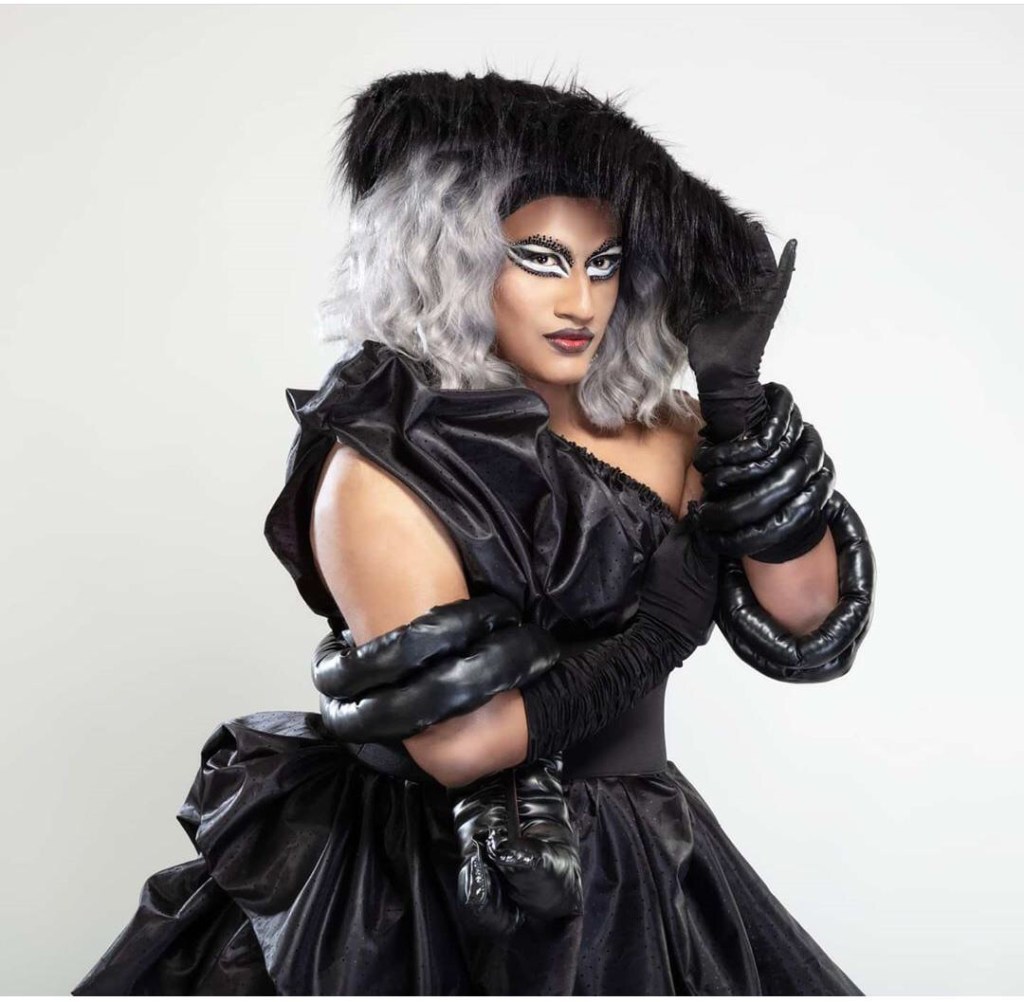
Male in a female avatar, Dragqueens otherwise known as “female impersonators” are mostly gay cisgender men. There are many other dragqueens as well of varying sexual orientations and gender identity. Similar women also perform as Dragkings, dress as men and take on male personas but we’ll only talk about dragqueens in this post.

Prateek Sachdeva (Betta naan stop)

Drag is an intense and excruciating process. It takes 3 hours of detailed makeup and weeks of planning to create a look and performance. Their eyebrows are glued, hair tucked and they stand on stilletos for hours. Their genitals are squished or taped below their garment. To most, it may seem like one fancy fun loving job but the issues attached to it’s crux has some different story to tell altogether. Let’s go through it from the beginning.

The ameliorate:

In India, Hijra community introduced drag queens to the country. The boys weren’t allowed to do tough jobs then, like washing clothes and utensils or working in a paddy field. They used to get singing and dancing lessons. They were treated and trained delicately. Initially, acting wasn’t a viable option for the women in our society. The regulation used to make kids believe that those males were females. This gave rise to the art of drag. Males started enjoying it and didn’t want to keep it as just a hobby but turn it into their full time jobs. But being an Indian or an Indian-origin drag queen comes with a unique set of challenges but for those in the industry today, these are things they have learnt to deal with – whether it’s the inborn misogyny or simply a lack of understanding.

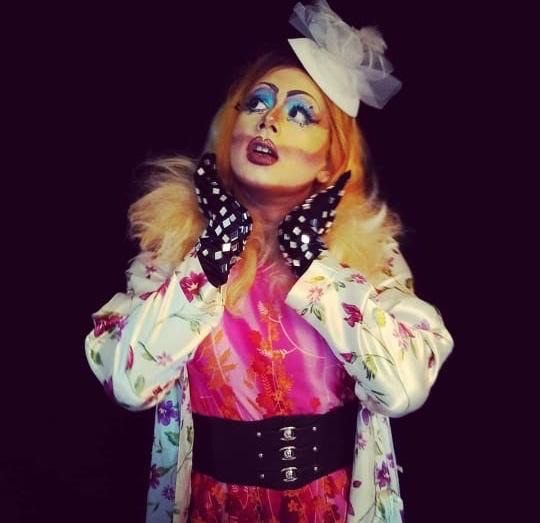
Alex Matthew (Maya)

Though drag as a performance art is at its nascent stages in India, some drag queens have already established themselves, breaking one stereotype after another and one such dragqueen is Maya/ Mayamma (Alex Mathew), first one to label himself as drag in India. He believes, “I’ve seen women abused. I wanted to write a background story where women could relate to it as well as the LGBTq+ community who undergo a lot of abuse too. The intentional is to make people relate to Maya well as a character.”

Men could be and can be feminine too

Ikshaku (Khushboo)

Indian drag is an ocean and we haven’t even begun to swim the length and breadth of it. At first, Drag didn’t exist as a culture in India but there were smidgens of it in traditional art forms like Kathakali, Theyyam and Mohinattam. Also film industry introduced characters like Robin Williams in Mrs. Doubtfire and Kamal Hassan in Chachi 420. Everything seems acceptable when it’s on screen but when it comes to real life, the tables turn. Those who perform drag full-time are faces with many personal, physical and financial sacrifices. Public can be really insensitive, especially when you’re performing in a bar. Unruly men would try to pull their wig, try to dance too close with them, invading their personal space. The basic issue of respecting women and artists presenting themselves as women, still continues to scream rebelling. They also risk being discriminated not only in public but also within the gay community.

After the discrimination of Section 377, drag culture has got impacted to a great extent. Because some dragqueens identify themselves as queer, some as gay. So their identity is questioned now and then. They’re accustomed to police humiliation while travelling in their drag avatar. They are frequently mistaken as crossdresser or trans people. Keshav Suri, Executive Director for the Lalit Suri Hospitality Group puts it aptly when he says, “Trans is who you are and Drag is what you do”. People also assume that dragqueens suffer from Paraphilia (a condition characterized by abnormal sexual desires, typically involving extreme or dangerous activities) or they dress up because they’re attracted to themselves.

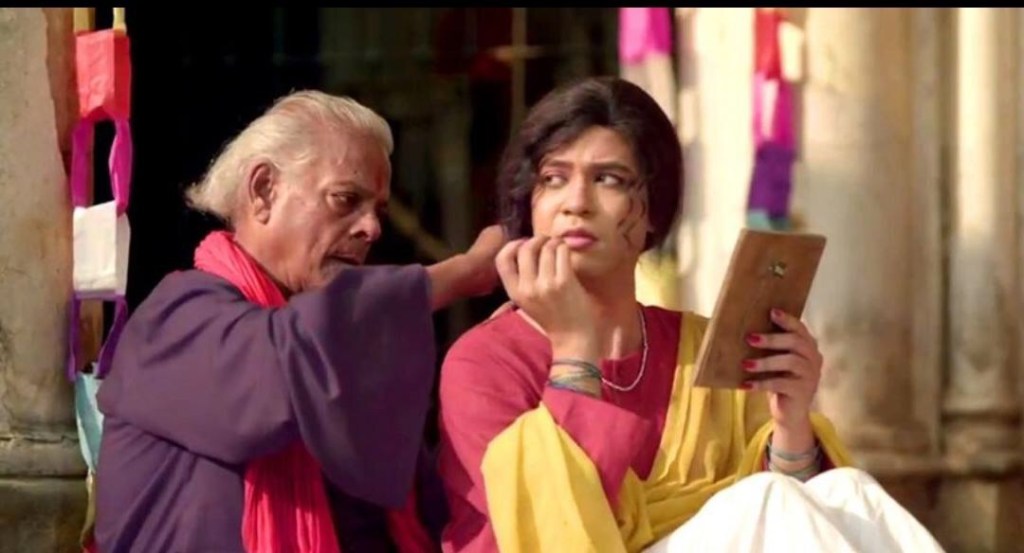
Ranjan Bose

Misconceptions like them being prostitutes and mentally retarded, still prevail in society. But for Drags, Gender is a construct which is problematic because of expectations it imposes. So they find much freedom in breaking rules of gender and class by wearing what they want. Maya the Dragqueen said that ,” I believe, if we truly want to spread awareness about gender equality, individualism and feminism, we need to start at the grassroots.” India has miles to go before it’s citizens normalise drag and it’s culture. I’d like to end it with RuPaul’s, American dragqueen and host of RuPaul’s Drag race, quote:

“When you become the image of your own imagination, it’s the most powerful thing you could ever do.”

Sources: vervemagazine.in

Images: Google

https://bjmc.home.blog/wp-content/uploads/2020/02/dragqueen-interviews.doc

Fair pay, fair play.

By- Sourabh Upreti and Devja Trivedi

Bollywood’, has influenced daily life and culture in india for decades now. In fact, movies are the mainstay of entertainment and almost a religion in the nation. Bollywood has surpassed Hollywood in the number of tickets sold annually. But it still lags on the grounds of gender based equality. The issue of pay parity in hindi film industry is not so secret now. Many female and male actors have given their take on it. Most are of view that the fee for a similar set of skills and amount of work should be equal across the genders.

There is no country on earth where women make as much as men for the same work, according to the Monster Salary Index 2016, women still make 25% less than men, and as many as 68.5% of women in Indian workforce feel they have experienced wage inequality. Actresses like Priyanka Chopra and Deepika Padukone are paid much less than their male co-stars, despite having high critical acclaim and box-office reputations.

Marathi actress named Durgabai Kamat was the first women to enter Bollywood. Working in movies or in the theatre was a taboo for women at that time, so Dadasaheb Phalke who was called as the father of Indian cinema introduced Durgabai in his second movie Mohini Brahmasur, as the leading lady of the movie as Parvati in 1913.Years have passed but representation of women in cinema has not improved to the level it should have. Though, in this new age many actresses have opened up about their idea on gender pay gap.

Deepika Padukone earned more than her male co-stars in Padmaavat made it to the headlines. Speaking about it she said, “You can feel a sense of – am I stepping over the line, or do I deserve it? But if you feel you deserve it, than you do. For years we’ve been made to feel that we should be okay with settling for less, with a promise of getting more the next time.”

Priyanka Chopra said,“I feel it every year, especially when you are doing movies with big actors, whether it’s India or America. I’ve been told straight up, it’s a female role in movie with big male actors attached, your worth is not considered much.”

In the past Kareena Kapoor demanded the amount of money as Shahrukh Khan in “Kal Ho Naa” Ho and it resulted in her being replaced by Preity Zinta. Of course this was not connected with Shahrukh rukh directly but he has many times spoken about this topic and also taken a step to put name of female leads of his movies before him in the credit. This step felt like tokenism to many.
Yes we all agree, Change needs time and constant efforts. We do see a shift in the scenario, but our main question should be is getting paid on the basis of your sex the right thing? Shouldn’t the pay depend upon the efforts and hard-work you put into your work, irrespective of the gender?

We should begin by asking why do women get paid less than men in the film industry in the first place? Is it because of the culture of sexism or male star reverence? Partly yes, but we as audiences also play a very important role in the current gender dynamics in Bollywood .

Cinema is the most powerful media for Mass communication . Impact of cinema and Bollywood on Indian culture cannot be ignored , Bollywood has the power to influence and create awareness among a large number of population . For eg : Outfit by an actor or an actress in a hit movie immediately become a trend . Bollywood had created movies related to many topics which were considered taboo . Bollywood had successfully created awareness and had broken the myths and superstitions, helping the Indian society to develop . Like for eg : Widow remarriage (“Babul”), voice against corrupt politicians and politics (“Rang De Basanti” ), etc . That’s why Bollywood can help in bringing a revolution, in India everything starts with Bollywood if they can show how the Indian actresses are not getting the honor and money for their hard work and efforts after that things might change and it’s not only about Bollywood even after “The equal Remuneration act of 1976” still there are many women in different fields who are putting equal efforts and input compared to the male workers but the outcome is not equal, they’re still getting discriminated on the basis of sex. This has to stop, treating someone differently on the basis of their sex and not giving them the opportunity/honor/money/services they deserve is very demotivating and wrong on so many different levels .

Reference- https://www.forbes.com/sites/suparnadutt/2017/08/30/in-india-the-gender-pay-gap-extends-even-to-bollywood/

The Distorted Representation of Women in Indian Society and Culture –

By Sharat Pillai, Rahul Kayarat, Harshini Sandesara & Kunal Walia

Blog-Post 2/2

Ever wondered why India has not able to achieve much when it comes to eradicating gender discrimination towards women. The Indian feminism movement started back in the early 90’s and women have been vocal about their issues ever since but the society has been in denial which is as equal as supporting the discrimination. The reason why females have not been able to climb up the social hierarchy or stay at par with men is due to the undeniable influence of men in society.

Yes, we have laws now punishable to acts like workplace harassment, Triple Talaq, property rights but these are surface level issues and is not necessarily relevant to every woman. Much more needs to be done in this regard pertaining to ground level reality, public life and closed spaces, domestic and workplace. Indian women need to be respected and prioritized in society. Female representation should be equated with their counterparts to strike a balance. Female discrimination has consequently altered the thinking of a large chunk of Indian women who think that they deserve this treatment and should end up doing household chores and embracing it barring their capability to work and contribute economically. So addressing the issue right from the grass root level is utmost important which has been happening but more needs to be done. The disparity is such that even leading Bollywood actresses have to adhere to fees as much as half of what the male actors charge. From little to no documentation of women’s efforts for India’s independence to only 3 women in the union cabinet, only 64 female MPs in the Lok Sabha out of 545, all of these different avenues only depict that females are not welcome by a large part of society (men).

The societal mindset of people in India is predominantly patriarchal right from the religious texts to the mainstream Hindi films. On the contrary, movies in 60’s and 70’s were less biased wherein females had characters to play and not just dance to an item number or act submissive to whatever the male lead does. The general movie going audience consume such content and it is normalized in their subconscious which entails their approach towards women, and that vicious cycle goes on. Films and politics are a reflection of the society we live in and it is the responsibility of the privileged people working in these domains to portray things without any gendered biases. A few exceptions to this in recent times have been the increasing number of women oriented movies being made, big props to actresses like Deepika Padukone, Kangana Ranaut, Priyanka Chopra and Taapsee Pannu to making the most of what they can to deal with the gender disparity and put up a different narrative.

The domestic chain of command of an Indian women in her household is not a dystopian concept. It may not be the case for all but speaking for the general female strata, their husbands, brothers, and fathers are the defacto supremo from the decision making to being the breadwinners. Many deserving women have to succumb to household chores despite having the educational background to pursue a career of their own but who will do the chores then?

Hardly can we recall any notable women spearheading a big conglomerate or even small establishments. The hypocrisy is such that even female oriented brands, services are managed by male barons. Similarly, women are largely excluded from any brand summits, economic forums and panel talks because society doesn’t want to see a women guiding them as to how things need to be done. Moreover, women during their formative years are also prohibited from entering fields like engineering, finance, adventure sports and so on by society stating that these fields should be for men only. Religious indoctrination of certain values and morals have further contributed to the discrimination towards women. From Muslim women barred entry to mosques in Pune to them being under the Hijab for most part of their lives. All of these instances are reflective of the regressive times that we live in and people should be educated to be more rational and not just follow religion blindly.

Holistically, India is on its way to a much more safe and impartial space for women. More regulatory bodies like The National Commission of Women need to be introduced addressing the different malpractices acted upon them. Another trivial aspect to this is that more and more women need to take center stage and be involved in various decision-making and law-making positions. At the same time, the movement should be inclusive of men as they need to be equally educated about the prejudices women experience in order to build a society devoid of gendered biases.

References:-

https://www.outlookindia.com/website/story/business-news-gender-pay-gap-high-in-india-women-earn-19-per-cent-less-than-men-report/326623

https://www.facebook.com/pages/category/Community/Gender-Equality-India-279907222457089/

https://www.tribuneindia.com/news/archive/editorials/the-sabarimala-protests-708717

https://www.livemint.com/Consumer/8tYQQpwOkMHQaENFL5Od8J/What-data-says-about-patriarchy-in-films.html

You are no one to decide.

Attaining gender justice is not an easy task in India. From time immemorial, a girl child has been considered as an unwanted entity and a burden whom the parents would not mind doing away with. Discrimination against women begins even before her birth. The gruesome evils of female feticide and infanticide prove how brutal the world could be to women.
Though the Indian constitution provides equal rights and privileges for men and women and makes equal provision to improve the status of women in society, majority of women are still unable to enjoy the rights and opportunities guaranteed to them.
Traditional value system, low level of literacy, more house hold responsibilities lack of awareness, non-availability of proper guidance, low mobility, lack of self confidence family discouragement and advanced science and technology are some of the factors responsible to create gender disparity in our society. The most important causes of gender disparity such as poverty, illiteracy, unemployment, social customs, belief and anti-female attitude are discussed here.
(http://www.yourarticlelibrary.com/india-2/gender-discrimination-in-india-6-major-causes/47671)

Women, being biologically weaker than men often face inequalities or discriminations. It is the historical thinking of people that has divided the social roles of each gender. Women are expected to handle the domestic work and take care of their children, while men go outside the house to earn livelihood for the family. Not in just domestic issues, these social roles have also dominated the working abilities of women. Inequality can also be seen in a work place. Even in the 21st century, where people are fighting for their own rights; there are some male categories who continue to dominate their wives, sisters and daughter just to show that they hold more power on account of them being the ‘head of the family’.

Equality the sexes is a huge part of basic human rights. It means that men and women have the same opportunities to fulfil their potential in all spheres of life.
Most of the women are unaware of their basic rights and capabilities. They even do not have the understanding as to how the socio-economic and political forces affect them. They accept all types of discriminatory practices that persist in our family and society largely due to their ignorance and unawareness.
Article 15 of the Indian constitution states that the state shall not discriminate any citizen on the grounds of only sex. The irony is that there still is widespread discrimination which is a form of injustice to women. Hence at the onset of the new millennium let this generation be a historic example by putting an end to the gender – based discriminations by unfurling the flag of gender justice in all our action and dealings.
If women get equal opportunities like men, they can work in every field like men. Today if she lags behind a little, it is not her fault but the fault of traditions which have suppressed them for centuries , owing to this, her own thoughts like also hang around only familial life and her nearest environment also does not provide favourable conditions for her devotion in the outside work. In order to change the situation along with economic growth social progress is also greatly required. Hence the need of the hour is to effectively combat gender disparity as to promote gender equality by sufficiently empowering the women.
Patriarchal norms have marked women as inferior to men. A girl child is considered a burden and is often not even allowed to see the light of the world. It is hard to imagine this state of affairs in the 21st Century when women have proved to be strong leaders in every field possible. From wrestling to business, the world has been revolutionised by exceptional women leaders in fields that were until recently completely dominated by men.
• 42% of married women in India were married as children (District Information System for Education (DISE) 3)
• 1 in every 3 child brides in the world is a girl in India (UNICEF)
• India has more than 45 lakh girls under 15 years of age who are married with children. Out of these, 70% of the girls have 2 children (Census 2011)
The need of the hour is to make a change in the mindset of the society and destroy the prejudices that damage the future of the girl child . What is required is a concerted effort to sensitise the society in eradicating this issue of gender inequality. It is high time that every child is treated equally and given every opportunity required to grow to his/her full potential.

  • By-
  • KARAN MALUKAR
  • RASHI DESAI

Gender Neutral Laws in India – Need of the hour

By – Yana Kalal, Nandini Parikh & Shipra Chaudhary

Justice to one or injustice to another?

Who would have thought the laws whose very purpose was to protect one from discrimination shall themselves be deemed discriminatory in nature. Before getting into the core of the subject, let us first make clear what is gender neutrality and thereby what are gender neutral laws. Gender Neutrality is the idea that policies, language, and other social institutions such as gender roles and gender identity should stop distinguishing as per one’s gender or sex. One’s sex or gender is no way the hallmark or doctrine to follow a certain set of rules or the roles. Likewise, Gender Neutral Laws are laws which does not discriminate one in providing trial and justice on the basis of their gender.  

Now, you might be wondering how can laws discriminate on the basis of gender; they are the most sacred, fair and just institution human kind has ever developed. As much as we all want to believe it, so is not the case. Even at the dawn of third millennium, our judicial system is not advance enough to provide justice with a blind eye (what an injustice to the blind justice lady). Not that all laws are unjust and discriminatory (at least in India) however, there are a number of laws which do not provide equal justice to all the genders. Below is the list of such discriminatory laws to provide you all with some concrete insights: –


Image source: timesofindia.indiatimes.com

1. Only a man can be booked against adultery charges –  As per the section 497 of the Indian Penal Code, if a man indulges in sexual intercourse with the wife of a friend or acquaintance without the permission of the husband, the man is guilty of the offense ‘adultery’ under which he can be imprisoned for a maximum period of 5 years. But, wait! What about the woman? Well, according to the court of law a woman is incapable of making sexual choices therefore she can neither be punished nor is guilty under law’s eyes.

2. Consent of a girl under 16 not valid for sexual intercourse – According to clause (6) section 375 of IPC, a woman under sixteen is considered incapable of giving consent for sexual intercourse and hence the guy even if of the same age would be liable for rape charges if accused.‘Let a hundred guilty be acquitted, but one innocent should not be convicted’ these are the very words of our own judiciary. What should we call these laws then, hypocrisy?

3. Section 498A, Dowry Prohibition Act – This section states that mere demand of dowry is a punishable and unbailable offense. It was done so to make dowry law all the more stringent so as to eradicate the ill practice from the society. However, the law does not ask for any evidences before the arrest to prove if the demand of dowry has been made. The very law which was brought to empower women is being used by women to overpower men. So, remind me again if the saying was ‘innocent until proven guilty’ or ‘guilty until proven innocent’?

4. Legal age of marriage – As per the Prohibition of Child Marriage Act 2006, the minimum legal age to marry for men is 21 years whereas for women it is 18 years. Both the individuals are equal except for their biology so why this discrimination over age? It’s high time Indian judiciary needs to reassess its age-old laws and bring the much-needed change.

5. The Trans gender’s Act, 2018 – This bill was supposed to be progressive and fair to the trans community. However, it came out to be the opposite. As per the act, any sexual misconduct against any trans person will lead to imprisonment of 6 months which can be extended till 2 years. However, in case of woman, the same sexual violation amounts to a sentence of minimum 5 years. Progressive and fair? Not really!

And this is not it, you might get astounded to know that there does not exist a single law to protect sexual harassment against men. In other words, Indian judiciary refuses to believe that even men can be sexually violated. If this doesn’t worry you, I am not sure what will.  Indian Constitution and judicial system, from the very beginning are credited for being liberal and protecting the rights of its citizens irrespective of the gender. Feels like it’s time to go back to the basics.

Article 14 of the Indian Constitution – “The State shall not deny to any person equality before the law or the equal protection of the laws within the territory of India.”

References: –

  • indiankanoon.org
  • nayidisha.com