Gender Neutrality in India

BY: VIDHI SAXENA AND KHUSHI THAKUR

Okay so another blog on gender issues in India ugh! I know you might be having this thought but trust me there’s a lot more to know about gender issues or issues in general faced in India. You see issues related to gender have always existed since the time of say the “Mahabharata” or “Ramayana” till present.

Yes, time has changed and a lot has happened since then like, different empowering campaigns/movements, platforms to present oneself as they want to be, laws supporting men and women and what not but there’s one question that bothers me

WhatsApp Image 2020-02-27 at 11.42.14 PMBut before moving on it is important to know what gender neutrality is. Gender neutrality is the idea that policies, language, and other social institutions which characterize social structures, gender roles, or gender identity, should avoid distinguishing roles according to people’s sex or gender. This is believed to help in avoiding discrimination based on gendered conceptions of every phenomenon.

Is India ready for gender neutrality yet?

WhatsApp Image 2020-02-27 at 11.44.53 PMIs India ready for gender neutrality yet?
India has always been a land that is driven on past ideologies of women submitting themselves to male dominated patriarchal society and mostly meant to build up strong homes for their men who were out there at fieldwork to build a newly independent country.

But is everyone really independent?
Do they have open freedom to be themselves?

In old English, the suffix ‘man’ meant ‘person’. However, the modern English we use today refers that to masculinity. So, whenever someone says fireman, chairman or policeman we generally tend to think it’s a male job whereas the women also started working for such jobs and I feel that these terms should be replaced by firefighter, chairperson and police officer and should be used very habitually. It applies vice versa as well for terms like waitress, actress or nurse.

I personally believe in removing the mark of difference the society has created, and people have got so habitual to this differentiation and have been continuing with it as if it doesn’t affect anybody. I believe gender neutrality can actually change the current culture we are living in, by changing small habits like using gender neutral language, picking up gender neutral parenting, dividing household work, generating a gender-neutral workforce and other small changes can really affect the current culture in much better ways. Gender-neutrality should be understood and used not only for either of sexes but for anyone in general.

It can be used to break the silence for LGBTQIA+ too. I strongly believe that for once we all should ditch the gender binaries and follow and make the next generation understand gender-neutral which can bring a huge change in every sphere. And  it’s been high time we start adapting to changes that really matter  rather than just blaming on to the culture saying ” it’s always been like this” and “why do we need to change things when everything is going great”, this is were we go wrong in thinking everything is great and we don’t need change, change is  the necessity of the hour and forever will be  something we need in order to achieve a better environment for everyone .

“LGBT Community”


LGBT community stands for Lesbian, gay, bisexual and transgender. This gender usually unaccepted in the society. They are treated unequally in public sphere. This are the community in which the person sexually attracted with the people of both sexes. A gay man is sexually attracted with men and women called the Lesbian. India’s this community struggle for long time. Our India is not open on LGBT discussion .The Lesbian children are unable to speak about that they are transgender. They do not open their gender in public sphere. Earlier they face lot of discrimination by the people. They were unable to married with each other. It was not legalised .Some organisations are active of the lesbians fighting for their rights in many cities. Generally it feels them shameful to be lesbian so they aren’t able to come in public and accept it. But now many people are active for these and making equality in all gender. When we study about the gender we came to know that lesbians are not an abnormality it’s a type of a gender and it is by birth. Hence, there are various gender exist. In India this cases are found less as compared to other countries. So this is difficult to accept for the people. But now as we see many examples among us have reached to a certain height. As the Supreme Court passes the judgement on Section 377 and legalised their marriage after these decision a lot of discussion occurs among the youth. But now it has become the normal and a healthy discussion for the people about LGBT. For a long period of time they were apart from the society but now they are connecting slowly-slowly with the society. Now lesbians are also coming in public sphere and sharing their feelings with the public by joining some public programs and also they are not feeling nervous by sharing Gender Identities.

BY:- PAREEKSHIT RAJPUROHIT

Maa Feminism, Maa Rhulz

a

Feminism is a real drain when it comes to discussion, earlier it was meant to be for upliftment of women, but now it is defined in as many ways as a series of magnetic lines around a magnet. When somehow a consensus is derived on that, then new doubts emerge within them. For eg- Is it really equality, to offer a female your seat in bus? Questions like these used to hit me, until I managed to find out the answer to be NO. Means, why should I give my seat to someone respective of their gender, logically to do so, I should be looking at the need of the person rather.

b

Studying the lookout of people’s reaction can also be very entertaining, today while sitting on a railway platform, I just think that what would I be doing if I find a man beating his wife here, the scene which I framed in came to be as, not just me, but many people would approach the scenario to nullify the bullying by him, shortly police would also arrive and the man’s moral lookout would be degraded severely among that crowd, and so it should be. Now what I improvised further, proved me a quite hypocrite, I just reversed the scenario of my imagination, and this time made the man take beating from his wife, as soon as I glanced about it, the first reflex was a chuckle by me, I somehow concluded that in this case police might intervene but not the people, including ME. To maintain peace in public place, police might arrive to stop it, but I guess no strict action would be taken in this case. The people around would be giggling, and in this case too, the lookout towards that man itself would be not positive by the public. And women would be looked with scare.


Famous dialogues by heroes in Bollywood movies be like-‘I don’t fight women, I don’t kill women and children’. The second line seems to be quite fair and heroic, but my mindset looks at it in a quite different way, You automatically prove women to be weak and incapable by stating so. A counter argument may arrive that the protagonist RESPECTS women, so he doesn’t lend a hand on them, but why is he respecting the womankind and agreeing to killing mankind, as if the latter is all bad. It links to me like if Hitler is saying-‘I don’t kill Christians or Hindus, Jews are okay for me to be slaughtered.’ Well that doesn’t justifies the massacre done by him, and so applies to those dialogues.

c

Not just these, try flipping the coin in other prospects too, you would drown in your thoughts, just for your help, try thinking about girls being regular long distance truck drivers in India, there might already be some really out there, but just give it a thought, and carefully assess what you conclude.


Image Credits- Google

CINEMA AS A PLATFORM TO BRING A CHANGE IN THE WAY PEOPLE THINK ABOUT WOMEN

What is a stereotype?      

A set idea that people have about what someone or something is like, especially an idea that is wrong

How cinema is taking steps to break stereotypes? (Bollywood)

Cinema is taking great steps to break stereotypes of the Indian society. Cinema is taking up issues that are still prevailing in the society like gender discrimination, portrayal of women, body shaming, promoting stereotypes, etc. People get influenced by the movies they watch and this can actually help in changing the thinking of the people in society on many gender related issues. Movies like Queen, Pink, Mardaani, English Vinglish, etc. have succeeded in providing a great social message and changing what people think about women and the value they hold for them. Not to blame anyone but our society somewhere or the other  favors men and suppresses, stereotypes and dominates women. Many movies encourage people (any gender) to fight for their rights and help them to come out and gives them a platform to express. In many ways movies tries to sensitize people about gender neutrality and how important it is to treat everyone equally irrespective of their gender.

Here are the two movies on which I have penned down my opinion and shown how the movies have broken stereotypes:

PINK (2016)

Pink is a movie which shows the story of three independent girls who live in Delhi and become a part of a crime just because they tried to defend and save themselves from something wrong that was about to happen (their fellow male friends misbehaved and tried to manipulate them because they were drunk).  The movie talks about problems like molestation, rape, violence against women, gender discrimination and many other issues faced by the women in our society. Three girls named Minal, Falak, and Andrea are constantly fighting against the wealthy and politically powerful boys who tried to molest them. Minal hits a glass bottle on one of the boy’s (Ranveer) head. Later the girls are also threatened by  Ranveer and his friends for what they did. Even the society judged the three girls on the basis of this incident and didn’t support them. The society blindly judges women on the basis of what she wears, the length of her clothes, how she talks and carries herself, her occupation, whether she drinks or not, the time she comes home etc. Later, minal is charged for her actions and the case is called an attempt to murder and thus she is arrested by the police and to everyone’s surprise, no lawyer agrees to fight the case of the three girls as Ranveer is the son of a politician. Finally Deepak Sehgal decides to defend the three girls who had quit his job due to dipolar disorder. After a lot of struggle, the girls win the case and are able to prove that they were not wrong. The movie talks about stereotypes like women who drink in the bars are usually “available” for the men and are there to please and entertain them. In our society, no matter how many laws are made for the protection of women, it is always hard to change the mentality of people and the ideas they hold.

Their (three girls) pain reflects the voice of millions of women who have to deal with harassment and many other similar problems. In India, the male’s voice is usually given preference. Why do people still believe that men cannot do anything wrong until and unless they are provoked to do so? The society usually blames the victims instead of the perpetrators. A woman is always blamed for anything that happens even if she is the victim. The people need to change the way they think and make the society and people around them realize and that women are not objects and they donot exist to entertain men and satisfy them. It is the time; we should respect every gender and treat them equally.

Mardaani (2014)

Mardaani is a women centric film in which Rani Mukherjee is shown as a brave, dedicated and bold lady officer. Mardaani conveys a true story of child trafficking and drug rackets which exist and are constantly growing in India. This movie makes a mark. Shivani Shivaji Roy (Rani Mukherjee) is a senior Inspector of Crime Branch. Pyaari, a teenage girl and an orphan who is close to Shivani is kidnapped by a sex racket gang, which is run by the kingpin, Walt (Tahir Bhasin). Shivani mounts an operation to hunt down the gangs that kidnap children/ teenagers and force them to become sex slaves. It depicts the terrible and cruel reality of the world we live in and also represents the truth that children trafficking is a major problem of the country which has an alarming need to be eradicated. 

Even though it is a women centric movie and tries to empower women by conveying the message that women should stand up for their power and the fact that they can do many things but still, in spite of this, the name of the movie itself promotes gender stereotypes and is based on the literal meaning “LIKE A MAN”. According to me, women should not be judged on that scale because women are capable of doing everything, they only need a chance which most of the women don’t get in this ‘MALE-ORIENTED’ society. The movie is up to the point and touches a very sensitive issue of Gender neutrality and Child trafficking.

-Ruddrik Gajjar

SOCIAL MEDIA AND GENDER SENSITIZATION

A video about a lady recently went viral all over the social media that recorded a heated argument between a lady and a group of other girls.  The video was an attempt of the girls to bring forward the insensitivity that people had in their minds regarding rape and how people assume it being associated with the kind of clothes the girls chooses to wear. The whole issue began when a lady in a café commented on a girl’s way of dressing who sitting in the same café.  The old lady found the girl’s dress indecent and provoking. She had to say that the length of her skirt was very short and not appropriate. Adding on to the same she said that such dresses are the reason why she should get raped. The lady soon left the café after she got done and the girl on whom she had commented followed her to the store she went to. The girl along with her friends followed her to the store where the girls started recording the entire scenario. The video starts with the girl asking the old lady what she just said about her in the café. To which the lady arrogantly replies that she will not say anything.

Where the sole purpose of the girl was to make the lady rethink about what she said and apologize to her, the talk very soon turned into a heated argument wherein ladies from the store too joined. There was no turning back from both the sides, nor did the lady want to apologize, nor did the girls want to end the discussion without making the lady realize her mistake. The argument got extended upon calling the police too. The lady asked the employees to call the store manager and to also call the police. While the girls too wanted to call the police for letting them know what the old lady said. Amidst the same joined a lady from the store  who said that even she was a mother and if anyone had ever said something as bad as getting raped because of the kind of clothes she wore, she would have slapped them right on their face. Things got worse when the lady saw so many girls humiliating her and recording footage to make her say what she had said in the café. Out of anger and disgust, she even worse, to which everyone at the store was shocked to hear. Everyone was against the lady.

This being the story of yesterday i.e., 30 April 2019, right from the time it got uploaded by the girl, it got viral within an hour. The video crossed 1 million views and everyone around were posting stories to the lady and make her realize what she had done.

Everyone seemed to highly support the girls and stand with them. They were successful in identifying the lady and also did they manage to get an old picture of the same lady in a knee length dress, to which they added saying “Now the length of aunties’ skirt is bothering me” which tried to tell people that she was a hypocrite. This entire fiasco turning out to be of such intensity was not expected.  While it was the issue from the girl’s end, people without giving any thoughts about the same, started commenting on the lady. Where does freedom of expression come?  I am surely not in support of what the lady said and I totally agree to the fact that what she said was very wrong but is humiliating her to such an extent on the social media the only solution people would have thought about? Did they even think about what the consequences of such an action would have been?  It might lead to social pressure as well as something as acute as mental and physical distress. The effects of such an action can lead so many people to suffer.  People who haven’t done anything wrong, her children, her family who would also have to face the humiliation and social pressure. Where the lady was completely wrong about what she said and the fact that no one should have ever said something as insensitive as that, the reality of the society is that people still believe in this and hold the same mentality. It’s not just one lady, there are hundred out there who think in the same way, who have the same mentality and who believe that clothes of a lady actually decide whether they should be raped. Slut shaming, body shaming is still a thing that exists. The same thing could have been dealt in a better way by talking and making her realize her mistake.  You don’t have to humiliate people about what they say, you have to bring a change and make them sensitive. Everything has two sides of it and where everyone is seeing that the lady was wrong, the girls too were and celebrating the failures of society by cutting a cake with a group of people would surely not be the only thing to do after all that happened. Another question to rise is the fact that would the scenario right now if the same thing was said by a man?  Obviously not.  The consequences would have been much radical and the actions taken would have been completely different.  This is where law, order, and legal actions from the government come in.  Where the society talks about equality, is it really practiced in the society?  Are things implemented the way it should have been? 

If it were a guy, he would have been ended up behind the bars by midnight.

-Ruddrik Gajjar

GENDER BASED INDIAN ADVERTISEMENTS

Advertising is the best platform for promoting a product. More often than not women have been depicted in the usual stereotypical roles over the years. Women were only shown domestic products like detergent, washing bars, floor cleaners etc. We seldom see a man involved in any household work. The men were portrayed driving a luxury car or a bike, or inn luxury watch brands.
So these are some gender based ads:
(1) Tata Tea

How often we the girls have heard people say, “kya maa ne kuch sikhaya nahi?”
This ad is an perfect example, that it is common in every Indian household which shows how the society knowingly or unknowingly teach the children to be gender-biased.
The ad shows a young girl who seeks permission from her mother to go out and play badminton with her brother. The mother refuses her permission and instead asks the girl to help her out in kitchen. The mother, on the other hand encourages her son to play.
This ad highlights how the society treats girls or women differently from boys. It aims to highlight the stereotypical behaviour we on girls since childhood to their adulthood.

(2) Havells Hawa Badlegi

This ad talks about a new change happening in our society and breaks gender stereotype. In this ad a couple is sitting in registrar’s office, and the husband takes his wife’s last name and makes it official.
So we can see this was a brilliant yet simple take to break gender stereotype. I personally like this ad and I will rate this ad 5/5.

(3) BIBA – Change The Conversation

The ad shows the conversation between a man who is groom’s father and the old lady who is groom’s grandmother.
It starts with an old lady doing stitching and a couple walking in to their house. The couple has just gotten back from a meeting with their son’s bride and her family. The old lady asks her son about the visit. the man says it was good, as the girl and the family were very nice. Then the lady says about the dowry and asks whether he discussed anything about it or not.
The man says yes, and says that they’ve agreed on jewellery, a car and Rs 10 lakhs that we are going to give to the bride. The lady hears the word given and she is surprised. Then the man explains that the bride’s parents are trusting us and they are giving their precious daughter so they owe them that much at least. The man’s wife is happy with this statement and the old lady agrees to it.
The video beautifully portrays the change that has already started. The ad subtly talks about the change that is slowly occurring in the minds of the people.
Dowry is the biggest social evil of our society and we must stop it, starting from our own homes.

CONCLUSION

Now the scenario of women portrayed in Indian ads has been changed. Though there are still some ads which shows gender stereotype but there are some ads/brands which dare to break stereotypes beautifully and showcase the contemporary women in all her new avatar. Now she is being shown as a multi – tasker, sharper, wiser, vigorous and self confident in many recent ads. I would like to give examples: The Bharat Matrimony ad, Airtel ‘Boss’ ad, Nirma Ambulance ad.
Also, the philosophy is changing; today’s young men are respecting and accepting their wives to be equals.

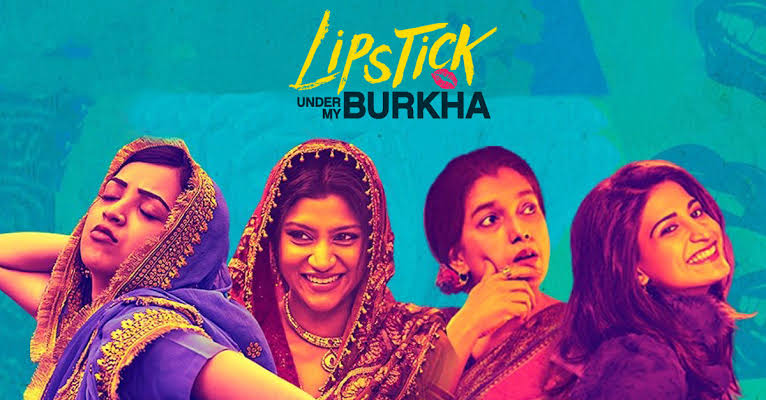
MOVIE REVIEW – LIPSTICK UNDER MY BURKHA

This movie follows the lives of four women’s: Leela, Rehana, Shirin, and Usha. The film continues the patriarchal stereotype that women are lying and conniving. Far from caving in to patriarchy, Lipstick Under My Burkha gives us a version of what women’s freedom might look like. What Lipstick Under My Burkha does is the “slow work” of inspiring women to their dream and chase their desire of a feminist world.

Leela is arranged to marry Manoj, but she wants to run away with her boyfriend(who is a photographer and lives in the same street) to set up her own business and to be independent. She is torn between two men – her lover and her fiance.

Rehana is a college student who comes from a conservative Muslim family. She wants to explore the cool things that girls of her age are into: to put lipstick, to wear jeans and wants to become a musician and loves dancing. On her escapades, she does all the things which were not allowed to her: wear ‘western’ clothes, go to the college parties, explore her sexuality, and participate in student protests.

Shirin is in an unhappy marriage with a man who keeps forcing her to have unprotected sex with him, while having an extra-marital affair himself. Her husband exercise his power to oppress her within and outside the bedroom. She is nothing more than a body to her husband for releasing out his frustrations. But, then also she finds strength in her ambition to work secretly as a sales woman and receives due recognition.

Usha is an 55 year old, widowed woman who is respectfully addressed as “Buaji” by everyone in her surroundings. Disobeying the societal expectation of living a chaste(virgin) life, Usha reads erotic novels and she wants to live as a sexual being again. She joins swimming classes and there she is lustfully attracted towards her swimming instructor and observes his semi nude, muscular body. Although society holds Usha’s sex chats and her readings of sex stories as taboo. She is scared of water, but she is more scared of a society which criticize her for learning swimming at this age and also for “jawaani ki bhoot” not leaving her not so jawaan body. So we can see that ‘The patriarchy still exists in India is undeniable’. So now the question arises that,

IS THERE ANY SPACE FOR HER TO EVEN DREAM OF A SEXUAL FANTASY IN OUR AGEIST AND PATRIARCHAL SOCIETY?

In short, this movie is a narrative of how women negotiate their desires, fantasies, and dreams within the patriarchal and culturally conservative social contexts on an everyday basis. It is a film about desire – not just sexual desire, but women’s desire to live life on their own terms. It is not just the story of these four characters, but it is the story and desires of the Indian women. Seeing ‘Lipstick Waale Sapne’ that means, every Indian women dare to dream free.

This is probably the first time someone has talked about it in mainstream cinema and this film is different from bollywood films. Mainstream bollywood films show romance and sex from the point of view of men. In various scenes and songs the heroine is shown as an sexual object of desire for the hero and sometimes for the villain too. But “Lipstick Under My Burkha” refrains from exercising the male gaze on the ‘sexy women’ but instead turns the female gaze towards the ‘macho man’.

The film ends with the four women’s who sits in a room, smokes and reads adult novels and sex stories.

India and Feminism!

We have seen four waves of feminism and feminism and fight for women rights in United States and Britain. But here in this article I am going to discuss feminism and people involved in the movement in India.

Not only women like Mirabai and Sati Gargi but also men like Sant Tukaram, Kabir, Raja Ram Mohan Roy and Kavi Narmad were included in the movement against society for women’s right, improper social norm and injustice.

Sati Gargi was philosopher of Ramayana times. She was daughter of sage Vachaku born in 800 B.C. She acquired knowledge of Vedas and scriptures and became renowned for proficiency in the field of philosophy and even surpassed men in her knowledge. Once when the Raja Janak held Rajsuya Yagna (a holistic activity where all the scholarly people and sages were invited to perform the rituals) Sati Gargi was also invited with all other scholars and sages there she ended into a debate with Sage Yajnavalkya who was well known sage and was considered as the most intelligent amongst. The debate went long and at the end Sati Gargi won the Debate.

This was the example of female setting an example of women equality and showing that women are no lesser then men. Now let’s see example men setting examples by fighting and making efforts for women issues and gender equality. Kavi Narmad was a poet, writer, essayist, author and reformer of 19th century. He wrote several poems and essays regarding social issues and improper social norms. He published “Nayikavishaypravesh” and “Uttam Nayika” dedicating to his wife Dahigauri (who later got separated). In the year 1860 he fought for widow remarriage against society and religious leader Jadunathji Maharaja for widow remarriage and he also married to widow of his caste Subhadra (later she changed her name to Narmadagauri) in the year 1869 breaking all the social norms. The second name is of Raja Ram Mohan Roy. Raja Ram Mohan Roy was a social reformer who started Brahmo Samaj (a socio-religious reform in Indian Subcontinent) and also fought against sati system. According to sati system the women whose husband died should burnt alive along with her husband which was opposed by him.

This was story of 19th century so let’s see the story of 20th century. Institutions like “Akhil Hind Mahila Parishad”, “Elite Women of India”, “Women’s wings of political parties in India”, “Bharatiya Grameen Mahila Sangh”are some organizations which are always on their toes to fight for women equality and women issues. And there are other several little organizations and NGOs started by the time which work for women issues.

Blog by Heta Bhavsar

Ladies SPECIAL!

Ladies special is a television show played on Sony television channel in week days (Monday-Friday).

Show focuses on the story of three friends Meghna, Bindu and Prarthna.

Prarthna Kashyap is a 30-year old hardworking woman who works in corporate telecom company and manages to earn bread for her family single handedly. She has struggled a lot therefore prefers a simple and conserved lifestyle but she has never restricted her dreams, she dreams to buy her own house one day in Bombay.

Second friend is Meghna Nikade. Meghna belongs to a lower middle class family who has started her own garments business with her husband Mandar Nikade. Mandar was working as supervisor in a textile mill but leave his job when he was insulted by his boss and his decision was supported by his wife Meghna. According to Meghna self-respect matters first than money, she says that though we are poor by money but we are rich by ethics and moral values. So when Mandar left his job she suggests starting their own business and is also gets successful in doing one along with her friend Jyoti and Mandar. Thought behind starting her own business was to make her children’s future bright; Meghna thinks that what struggle and comprises her and her husband faced during their childhood should not be faced by her children she wants to fulfill each and every wish of her children. Meghna is poor by money but rich in terms of thinking and dreams.

Third friend in Bindu Desai who addresses herself as “Bindu Dr. Amar Desai” as her husband is a well known cardiac surgeon and she is very proud of her. On the very first day of their marriage her husband confronted her that he loves the other girl who works with him and has married her only because of the family pressure. After knowing the truth instead of breaking the marriage and telling the truth to the family member Bindu decides to be friend with her husband also supports him in his thick and thins and takes care of his family whole heartedly. Though she is having problems in her married life as she loves the man who is never going to be hers and the couple is simply faking their marriage she is always happy and smiling face no matter how big the problem is she is always on her toes to solve. Though her husband is a well known cardiac surgeon and they are enough rich she believes to be independent and run the small business of mehendi and handles business as well as family.

The show conveys the message that if a woman decides to do something she can do and it is not necessary that when a women works then she cannot handle the household. This show proves that a woman is capable enough to handle work and house hand in hand and she is capable enough of living her dreams.

All the three characters showed in the show are shown in the very simple dress-up and in Indian dress code. This shows that women empowerment and modernization doesn’t mean one need to follow western dress code. To be modern and empowered one should be modern by thoughts and not by dress-up.  The show tries to define women empowerment and Indian Women. The show beautifully shows the versatility of the women, show focuses on the several roles a woman plays in her day to day life whether it be taking care of children and in-laws or supporting her husband in business or single handedly managing the finance of the whole family and also maintaining the workload in the office. Thus an Indian woman, her lifestyle and woman empowerment in Indian society and woman in Indian family setup in well define in this show.

Blog by Heta Bhavsar.

Amoli

Right now into this world when we are always hungry for entertainment and always have jolly and happy post over flooding on our social media accounts… What happens if suddenly a social media account goes inactive ….! Do we witness any change in our life? Don’t know why we are running so fast!! Do we have plans to match the speed of light? Anyways I accept that even I m like everyone else never care if something wrong is happening around me? But yeah had it been someone close to me … It would have definitely affected my life style … But then there is where we go wrong, we don’t care about it until and unless it doesn’t affect us…
Oh before I completely get into the topic, you should have the idea why I m talking about all these things. I was struggling to find a topic to write my blog on and suddenly can across the documentary “Amoli”. I naturally made my mom watch the documentary.
The documentary “Amoli”, a hindi word which means priceless talks about how we nevercome across the heinous business in our country.

The documentary is very well divided into four chapters which explains the whole concept of child trafficking. It starts with trying to explain the pain of Amoli’s parents and there is where I saw my mother crying, they don’t know if their daughter is ok or not, if she had the lunch or not. In the introduction part the anti trafficking activist Raju Nepali explains why, how, and where these children go missing. He says these children are kidnapped or are victim to trafficking because of demand for domestic servant and sex workers in large number. He also adds that every every source places have large number of sleeper agents who take children along with them to bigger cities in the name of job placement and are pushed into sex working.
The documentary says “Every 8 min a child goes missing in India”

CHHAPTER 1: मोल (becoming a commodity)

The business starts with giving a price to a human life, to a young girl. These girls are bought for as little as RS 1000 or sometimes for mere RS 200 or 300. Usually the money young girls earn is distributed between the pimp and the brothel madam, the only price of a young girls’ childhood is make-up, clothes and food.
Y.K Gautam, another anti-trafficking activist explains why minor girls are trafficked more. And the first reason being that they are more vulnerable and less mature. Second, being the belive on the myth that if a elderly man have sex with a very young girl then he would be cured of all diseases.

CHAPTER 2: माया (the devil demands)

Dr. Suman Lal a social worker says, it’s the rich and powerful people who invest into this as business. The other part of the reality is explained by Neelam, a survivor, trafficked at 14, she shares how because of the demand she given injections to induce artificial growth and how she was treated like am animal.

CHAPTER 3: मंथन (trapped in tradition)

Sometimes even family push their daughters into sex work for mere 200 to 500 rupees. Tara explains how a daughter in some communication are forced and trained about the sex work.

CHAPTER 4: मुक्ति (end of nightmare)

Ashok Rajagir, cheif investigative officer, Rescue Foundation says that one can stop the bussiness only if their end of demand.
At times when these children are thrown out of the bussiness or are rescued, it might be the end of those bad days but those days never let them move ahead in there life things go topsy turvey for them. Nothing remains normal and if someone wants to move on and try to find some reason for there lives the society never let them do so.

I being less emotional than my mother just thought of how things change in a moment for someone, and they can’t be what they were earlier. But my mom I saw her crying, she said how difficult it would be for those parents who never get to know what happened to their child… how difficult would it be for them to eat, sleep and talk and be normal …
If just the thought to make her cry, then we can’t imagine how much painful it would be for those parents to be alive.

I (i.e. Aditi Parasher) thank you to go through my post and let me know all you feel about my post in the comment section below.