The art of pushing gender boundaries – Dragqueens.

By Khushi Thakkar and Neha Mantripragada

Male in a female avatar, Dragqueens otherwise known as “female impersonators” are mostly gay cisgender men. There are many other dragqueens as well of varying sexual orientations and gender identity. Similar women also perform as Dragkings, dress as men and take on male personas but we’ll only talk about dragqueens in this post.

Prateek Sachdeva (Betta naan stop)

Drag is an intense and excruciating process. It takes 3 hours of detailed makeup and weeks of planning to create a look and performance. Their eyebrows are glued, hair tucked and they stand on stilletos for hours. Their genitals are squished or taped below their garment. To most, it may seem like one fancy fun loving job but the issues attached to it’s crux has some different story to tell altogether. Let’s go through it from the beginning.

The ameliorate:

In India, Hijra community introduced drag queens to the country. The boys weren’t allowed to do tough jobs then, like washing clothes and utensils or working in a paddy field. They used to get singing and dancing lessons. They were treated and trained delicately. Initially, acting wasn’t a viable option for the women in our society. The regulation used to make kids believe that those males were females. This gave rise to the art of drag. Males started enjoying it and didn’t want to keep it as just a hobby but turn it into their full time jobs. But being an Indian or an Indian-origin drag queen comes with a unique set of challenges but for those in the industry today, these are things they have learnt to deal with – whether it’s the inborn misogyny or simply a lack of understanding.
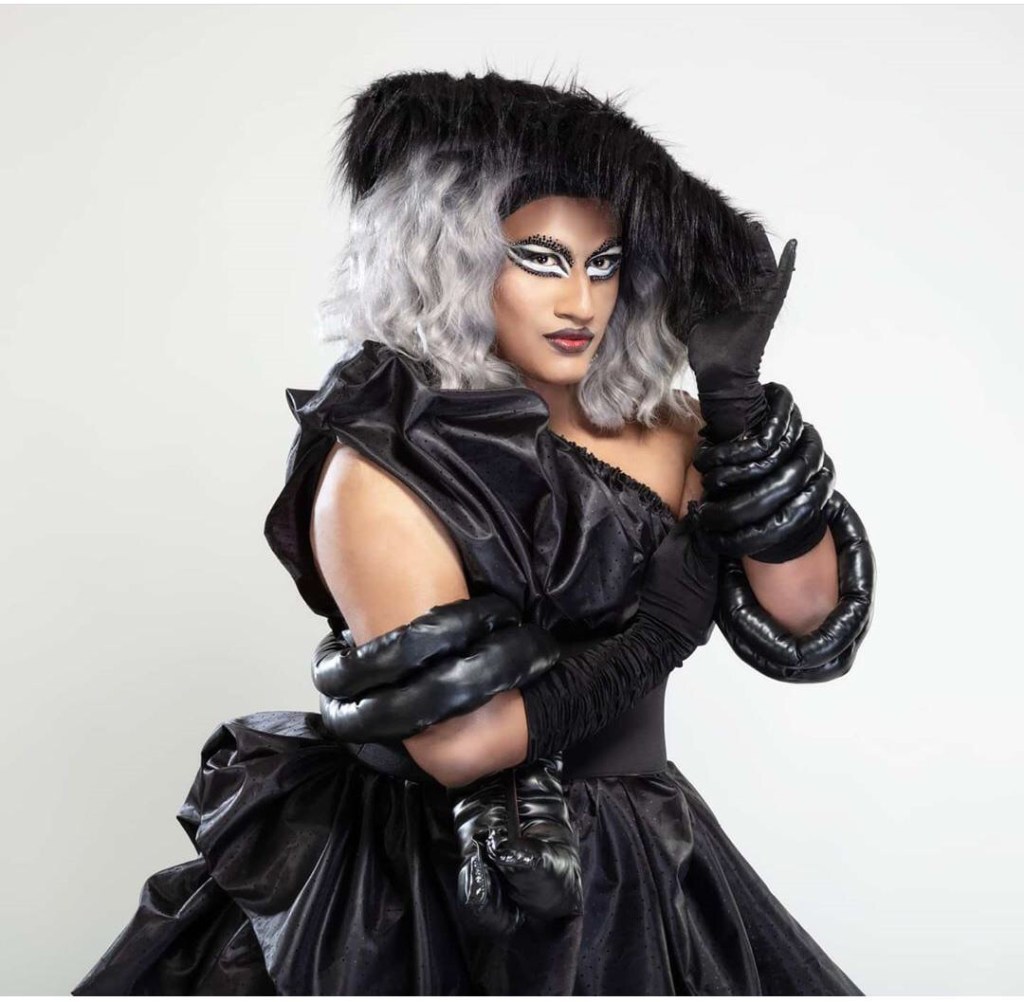
Alex Matthew (Maya)

Though drag as a performance art is at its nascent stages in India, some drag queens have already established themselves, breaking one stereotype after another and one such dragqueen is Maya/ Mayamma (Alex Mathew), first one to label himself as drag in India. He believes, “I’ve seen women abused. I wanted to write a background story where women could relate to it as well as the LGBTq+ community who undergo a lot of abuse too. The intentional is to make people relate to Maya well as a character.”

Men could be and can be feminine too
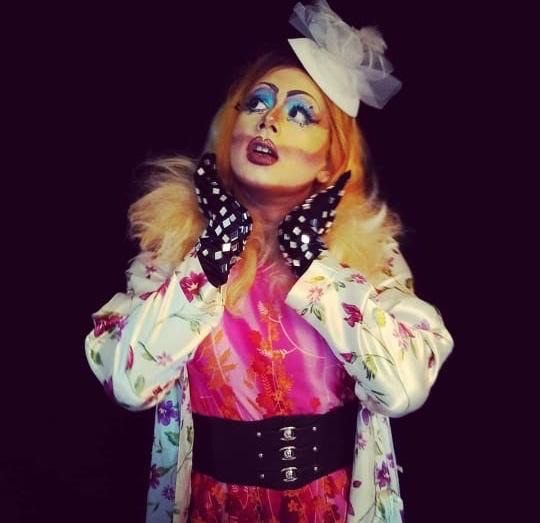
Ikshaku (Khushboo)

Indian drag is an ocean and we haven’t even begun to swim the length and breadth of it. At first, Drag didn’t exist as a culture in India but there were smidgens of it in traditional art forms like Kathakali, Theyyam and Mohinattam. Also film industry introduced characters like Robin Williams in Mrs. Doubtfire and Kamal Hassan in Chachi 420. Everything seems acceptable when it’s on screen but when it comes to real life, the tables turn. Those who perform drag full-time are faces with many personal, physical and financial sacrifices. Public can be really insensitive, especially when you’re performing in a bar. Unruly men would try to pull their wig, try to dance too close with them, invading their personal space. The basic issue of respecting women and artists presenting themselves as women, still continues to scream rebelling. They also risk being discriminated not only in public but also within the gay community.

After the discrimination of Section 377, drag culture has got impacted to a great extent. Because some dragqueens identify themselves as queer, some as gay. So their identity is questioned now and then. They’re accustomed to police humiliation while travelling in their drag avatar. They are frequently mistaken as crossdresser or trans people. Keshav Suri, Executive Director for the Lalit Suri Hospitality Group puts it aptly when he says, “Trans is who you are and Drag is what you do”. People also assume that dragqueens suffer from Paraphilia (a condition characterized by abnormal sexual desires, typically involving extreme or dangerous activities) or they dress up because they’re attracted to themselves.
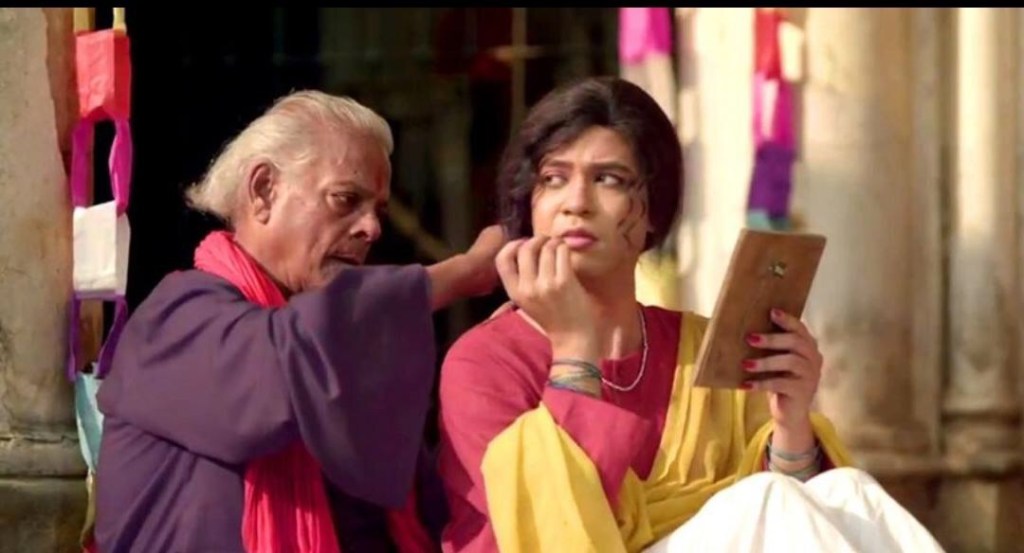
Ranjan Bose

Misconceptions like them being prostitutes and mentally retarded, still prevail in society. But for Drags, Gender is a construct which is problematic because of expectations it imposes. So they find much freedom in breaking rules of gender and class by wearing what they want. Maya the Dragqueen said that ,” I believe, if we truly want to spread awareness about gender equality, individualism and feminism, we need to start at the grassroots.” India has miles to go before it’s citizens normalise drag and it’s culture. I’d like to end it with RuPaul’s, American dragqueen and host of RuPaul’s Drag race, quote:

“When you become the image of your own imagination, it’s the most powerful thing you could ever do.”

Sources: vervemagazine.in

Images: Google

https://bjmc.home.blog/wp-content/uploads/2020/02/dragqueen-interviews.doc

Fair pay, fair play.

By- Sourabh Upreti and Devja Trivedi

Bollywood’, has influenced daily life and culture in india for decades now. In fact, movies are the mainstay of entertainment and almost a religion in the nation. Bollywood has surpassed Hollywood in the number of tickets sold annually. But it still lags on the grounds of gender based equality. The issue of pay parity in hindi film industry is not so secret now. Many female and male actors have given their take on it. Most are of view that the fee for a similar set of skills and amount of work should be equal across the genders.

There is no country on earth where women make as much as men for the same work, according to the Monster Salary Index 2016, women still make 25% less than men, and as many as 68.5% of women in Indian workforce feel they have experienced wage inequality. Actresses like Priyanka Chopra and Deepika Padukone are paid much less than their male co-stars, despite having high critical acclaim and box-office reputations.

Marathi actress named Durgabai Kamat was the first women to enter Bollywood. Working in movies or in the theatre was a taboo for women at that time, so Dadasaheb Phalke who was called as the father of Indian cinema introduced Durgabai in his second movie Mohini Brahmasur, as the leading lady of the movie as Parvati in 1913.Years have passed but representation of women in cinema has not improved to the level it should have. Though, in this new age many actresses have opened up about their idea on gender pay gap.

Deepika Padukone earned more than her male co-stars in Padmaavat made it to the headlines. Speaking about it she said, “You can feel a sense of – am I stepping over the line, or do I deserve it? But if you feel you deserve it, than you do. For years we’ve been made to feel that we should be okay with settling for less, with a promise of getting more the next time.”

Priyanka Chopra said,“I feel it every year, especially when you are doing movies with big actors, whether it’s India or America. I’ve been told straight up, it’s a female role in movie with big male actors attached, your worth is not considered much.”

In the past Kareena Kapoor demanded the amount of money as Shahrukh Khan in “Kal Ho Naa” Ho and it resulted in her being replaced by Preity Zinta. Of course this was not connected with Shahrukh rukh directly but he has many times spoken about this topic and also taken a step to put name of female leads of his movies before him in the credit. This step felt like tokenism to many.
Yes we all agree, Change needs time and constant efforts. We do see a shift in the scenario, but our main question should be is getting paid on the basis of your sex the right thing? Shouldn’t the pay depend upon the efforts and hard-work you put into your work, irrespective of the gender?

We should begin by asking why do women get paid less than men in the film industry in the first place? Is it because of the culture of sexism or male star reverence? Partly yes, but we as audiences also play a very important role in the current gender dynamics in Bollywood .

Cinema is the most powerful media for Mass communication . Impact of cinema and Bollywood on Indian culture cannot be ignored , Bollywood has the power to influence and create awareness among a large number of population . For eg : Outfit by an actor or an actress in a hit movie immediately become a trend . Bollywood had created movies related to many topics which were considered taboo . Bollywood had successfully created awareness and had broken the myths and superstitions, helping the Indian society to develop . Like for eg : Widow remarriage (“Babul”), voice against corrupt politicians and politics (“Rang De Basanti” ), etc . That’s why Bollywood can help in bringing a revolution, in India everything starts with Bollywood if they can show how the Indian actresses are not getting the honor and money for their hard work and efforts after that things might change and it’s not only about Bollywood even after “The equal Remuneration act of 1976” still there are many women in different fields who are putting equal efforts and input compared to the male workers but the outcome is not equal, they’re still getting discriminated on the basis of sex. This has to stop, treating someone differently on the basis of their sex and not giving them the opportunity/honor/money/services they deserve is very demotivating and wrong on so many different levels .

Reference- https://www.forbes.com/sites/suparnadutt/2017/08/30/in-india-the-gender-pay-gap-extends-even-to-bollywood/

The Distorted Representation of Women in Indian Society and Culture –

By Sharat Pillai, Rahul Kayarat, Harshini Sandesara & Kunal Walia

Blog-Post 2/2

Ever wondered why India has not able to achieve much when it comes to eradicating gender discrimination towards women. The Indian feminism movement started back in the early 90’s and women have been vocal about their issues ever since but the society has been in denial which is as equal as supporting the discrimination. The reason why females have not been able to climb up the social hierarchy or stay at par with men is due to the undeniable influence of men in society.

Yes, we have laws now punishable to acts like workplace harassment, Triple Talaq, property rights but these are surface level issues and is not necessarily relevant to every woman. Much more needs to be done in this regard pertaining to ground level reality, public life and closed spaces, domestic and workplace. Indian women need to be respected and prioritized in society. Female representation should be equated with their counterparts to strike a balance. Female discrimination has consequently altered the thinking of a large chunk of Indian women who think that they deserve this treatment and should end up doing household chores and embracing it barring their capability to work and contribute economically. So addressing the issue right from the grass root level is utmost important which has been happening but more needs to be done. The disparity is such that even leading Bollywood actresses have to adhere to fees as much as half of what the male actors charge. From little to no documentation of women’s efforts for India’s independence to only 3 women in the union cabinet, only 64 female MPs in the Lok Sabha out of 545, all of these different avenues only depict that females are not welcome by a large part of society (men).

The societal mindset of people in India is predominantly patriarchal right from the religious texts to the mainstream Hindi films. On the contrary, movies in 60’s and 70’s were less biased wherein females had characters to play and not just dance to an item number or act submissive to whatever the male lead does. The general movie going audience consume such content and it is normalized in their subconscious which entails their approach towards women, and that vicious cycle goes on. Films and politics are a reflection of the society we live in and it is the responsibility of the privileged people working in these domains to portray things without any gendered biases. A few exceptions to this in recent times have been the increasing number of women oriented movies being made, big props to actresses like Deepika Padukone, Kangana Ranaut, Priyanka Chopra and Taapsee Pannu to making the most of what they can to deal with the gender disparity and put up a different narrative.

The domestic chain of command of an Indian women in her household is not a dystopian concept. It may not be the case for all but speaking for the general female strata, their husbands, brothers, and fathers are the defacto supremo from the decision making to being the breadwinners. Many deserving women have to succumb to household chores despite having the educational background to pursue a career of their own but who will do the chores then?

Hardly can we recall any notable women spearheading a big conglomerate or even small establishments. The hypocrisy is such that even female oriented brands, services are managed by male barons. Similarly, women are largely excluded from any brand summits, economic forums and panel talks because society doesn’t want to see a women guiding them as to how things need to be done. Moreover, women during their formative years are also prohibited from entering fields like engineering, finance, adventure sports and so on by society stating that these fields should be for men only. Religious indoctrination of certain values and morals have further contributed to the discrimination towards women. From Muslim women barred entry to mosques in Pune to them being under the Hijab for most part of their lives. All of these instances are reflective of the regressive times that we live in and people should be educated to be more rational and not just follow religion blindly.

Holistically, India is on its way to a much more safe and impartial space for women. More regulatory bodies like The National Commission of Women need to be introduced addressing the different malpractices acted upon them. Another trivial aspect to this is that more and more women need to take center stage and be involved in various decision-making and law-making positions. At the same time, the movement should be inclusive of men as they need to be equally educated about the prejudices women experience in order to build a society devoid of gendered biases.

References:-

https://www.outlookindia.com/website/story/business-news-gender-pay-gap-high-in-india-women-earn-19-per-cent-less-than-men-report/326623

https://www.facebook.com/pages/category/Community/Gender-Equality-India-279907222457089/

https://www.tribuneindia.com/news/archive/editorials/the-sabarimala-protests-708717

https://www.livemint.com/Consumer/8tYQQpwOkMHQaENFL5Od8J/What-data-says-about-patriarchy-in-films.html

You are no one to decide.

Attaining gender justice is not an easy task in India. From time immemorial, a girl child has been considered as an unwanted entity and a burden whom the parents would not mind doing away with. Discrimination against women begins even before her birth. The gruesome evils of female feticide and infanticide prove how brutal the world could be to women.
Though the Indian constitution provides equal rights and privileges for men and women and makes equal provision to improve the status of women in society, majority of women are still unable to enjoy the rights and opportunities guaranteed to them.
Traditional value system, low level of literacy, more house hold responsibilities lack of awareness, non-availability of proper guidance, low mobility, lack of self confidence family discouragement and advanced science and technology are some of the factors responsible to create gender disparity in our society. The most important causes of gender disparity such as poverty, illiteracy, unemployment, social customs, belief and anti-female attitude are discussed here.
(http://www.yourarticlelibrary.com/india-2/gender-discrimination-in-india-6-major-causes/47671)

Women, being biologically weaker than men often face inequalities or discriminations. It is the historical thinking of people that has divided the social roles of each gender. Women are expected to handle the domestic work and take care of their children, while men go outside the house to earn livelihood for the family. Not in just domestic issues, these social roles have also dominated the working abilities of women. Inequality can also be seen in a work place. Even in the 21st century, where people are fighting for their own rights; there are some male categories who continue to dominate their wives, sisters and daughter just to show that they hold more power on account of them being the ‘head of the family’.

Equality the sexes is a huge part of basic human rights. It means that men and women have the same opportunities to fulfil their potential in all spheres of life.
Most of the women are unaware of their basic rights and capabilities. They even do not have the understanding as to how the socio-economic and political forces affect them. They accept all types of discriminatory practices that persist in our family and society largely due to their ignorance and unawareness.
Article 15 of the Indian constitution states that the state shall not discriminate any citizen on the grounds of only sex. The irony is that there still is widespread discrimination which is a form of injustice to women. Hence at the onset of the new millennium let this generation be a historic example by putting an end to the gender – based discriminations by unfurling the flag of gender justice in all our action and dealings.
If women get equal opportunities like men, they can work in every field like men. Today if she lags behind a little, it is not her fault but the fault of traditions which have suppressed them for centuries , owing to this, her own thoughts like also hang around only familial life and her nearest environment also does not provide favourable conditions for her devotion in the outside work. In order to change the situation along with economic growth social progress is also greatly required. Hence the need of the hour is to effectively combat gender disparity as to promote gender equality by sufficiently empowering the women.
Patriarchal norms have marked women as inferior to men. A girl child is considered a burden and is often not even allowed to see the light of the world. It is hard to imagine this state of affairs in the 21st Century when women have proved to be strong leaders in every field possible. From wrestling to business, the world has been revolutionised by exceptional women leaders in fields that were until recently completely dominated by men.
• 42% of married women in India were married as children (District Information System for Education (DISE) 3)
• 1 in every 3 child brides in the world is a girl in India (UNICEF)
• India has more than 45 lakh girls under 15 years of age who are married with children. Out of these, 70% of the girls have 2 children (Census 2011)
The need of the hour is to make a change in the mindset of the society and destroy the prejudices that damage the future of the girl child . What is required is a concerted effort to sensitise the society in eradicating this issue of gender inequality. It is high time that every child is treated equally and given every opportunity required to grow to his/her full potential.

  • By-
  • KARAN MALUKAR
  • RASHI DESAI

Gender Neutral Laws in India – Need of the hour

By – Yana Kalal, Nandini Parikh & Shipra Chaudhary

Justice to one or injustice to another?

Who would have thought the laws whose very purpose was to protect one from discrimination shall themselves be deemed discriminatory in nature. Before getting into the core of the subject, let us first make clear what is gender neutrality and thereby what are gender neutral laws. Gender Neutrality is the idea that policies, language, and other social institutions such as gender roles and gender identity should stop distinguishing as per one’s gender or sex. One’s sex or gender is no way the hallmark or doctrine to follow a certain set of rules or the roles. Likewise, Gender Neutral Laws are laws which does not discriminate one in providing trial and justice on the basis of their gender.  

Now, you might be wondering how can laws discriminate on the basis of gender; they are the most sacred, fair and just institution human kind has ever developed. As much as we all want to believe it, so is not the case. Even at the dawn of third millennium, our judicial system is not advance enough to provide justice with a blind eye (what an injustice to the blind justice lady). Not that all laws are unjust and discriminatory (at least in India) however, there are a number of laws which do not provide equal justice to all the genders. Below is the list of such discriminatory laws to provide you all with some concrete insights: –


Image source: timesofindia.indiatimes.com

1. Only a man can be booked against adultery charges –  As per the section 497 of the Indian Penal Code, if a man indulges in sexual intercourse with the wife of a friend or acquaintance without the permission of the husband, the man is guilty of the offense ‘adultery’ under which he can be imprisoned for a maximum period of 5 years. But, wait! What about the woman? Well, according to the court of law a woman is incapable of making sexual choices therefore she can neither be punished nor is guilty under law’s eyes.

2. Consent of a girl under 16 not valid for sexual intercourse – According to clause (6) section 375 of IPC, a woman under sixteen is considered incapable of giving consent for sexual intercourse and hence the guy even if of the same age would be liable for rape charges if accused.‘Let a hundred guilty be acquitted, but one innocent should not be convicted’ these are the very words of our own judiciary. What should we call these laws then, hypocrisy?

3. Section 498A, Dowry Prohibition Act – This section states that mere demand of dowry is a punishable and unbailable offense. It was done so to make dowry law all the more stringent so as to eradicate the ill practice from the society. However, the law does not ask for any evidences before the arrest to prove if the demand of dowry has been made. The very law which was brought to empower women is being used by women to overpower men. So, remind me again if the saying was ‘innocent until proven guilty’ or ‘guilty until proven innocent’?

4. Legal age of marriage – As per the Prohibition of Child Marriage Act 2006, the minimum legal age to marry for men is 21 years whereas for women it is 18 years. Both the individuals are equal except for their biology so why this discrimination over age? It’s high time Indian judiciary needs to reassess its age-old laws and bring the much-needed change.

5. The Trans gender’s Act, 2018 – This bill was supposed to be progressive and fair to the trans community. However, it came out to be the opposite. As per the act, any sexual misconduct against any trans person will lead to imprisonment of 6 months which can be extended till 2 years. However, in case of woman, the same sexual violation amounts to a sentence of minimum 5 years. Progressive and fair? Not really!

And this is not it, you might get astounded to know that there does not exist a single law to protect sexual harassment against men. In other words, Indian judiciary refuses to believe that even men can be sexually violated. If this doesn’t worry you, I am not sure what will.  Indian Constitution and judicial system, from the very beginning are credited for being liberal and protecting the rights of its citizens irrespective of the gender. Feels like it’s time to go back to the basics.

Article 14 of the Indian Constitution – “The State shall not deny to any person equality before the law or the equal protection of the laws within the territory of India.”

References: –

  • indiankanoon.org
  • nayidisha.com

Cross At Your Own Risk

  • By Harshini Sandesara, Kunal Walia, Sharat Pillai & Rahul Kayarat

He looked into the mirror as he placed the bindi right between his perfectly drawn eyebrows. Bindi. The sign to ward off evil, or to identify a married woman. He smiled, rubbed the lipstick smudge off his teeth and got up. Time was ticking and he still had a lot to do. After all, sarees aren’t easy to wear. The drapes fluidly lay on his left shoulder, along with the burden of facing the world. Sarees aren’t trending these days, you see. But the mirror still returned a smile, welcoming him into the first day of his reality.

Image Source: Youtube/BLUSH/Culture Machine Media

His heels click-clacked on the hardwood stairs as he climbed up to his workplace. The chatter of excited little kids, flying paper planes, little palms tapping on the wooden desks, the innocence of it all reminded him of why he had chosen to be a teacher, of all things. But the click-clack of his heels was soon veiled by laughter, smirks and teasing eyes from kids and colleagues alike. And by the end of the hour, all he had with him was embarrassment, abandonment and a call to the principal’s office. After all that had happened, the mirror in the school’s washroom couldn’t share the smile with him, as his left hand took off his bindi while the right one clutched his letter of termination in angst.


What was meant to be a walk of pride ended up being a walk of shame, as he walked home, disheartened. The eyes that ravaged his body violated him and his choices, and felt like a knife to the heart, twisting. The palms that clutched his head felt someone slip a few coins into them, the weight of which made his shoulders sag. The glass outside the store on the sidewalk mirrored his mascara stained cheeks, watermarked by sarees on display. Smiles were long gone, by then.


Gossip piped down, but seemed to drum all the more in his ears, as he entered his mohalla. Eyes and eyes everywhere. Women in sarees and men in safaris. Accepted but not accepting. Normal. Just when he thought his home would be a safe haven, he saw his wife and child at the doorstep, with packed bags and aimless eyes. His wife couldn’t bear to meet his teary eyes, while his child held the pallu of her saree in his small fist, looking for answers from the only parent he could understand. His home was just a house now. With only the mirrors for company. 


Sarees symbolise elegance and grace. Dignity too. But they don’t always deliver what they promise now, do they? Only the mirror can tell, as it stood witness to a pair of feet, blue, dangling, soulless. The saree didn’t cover his body anymore. It just wrapped around his neck, with a lethal hold.


The mirror mirrored a society where her reality was a myth.


Contrary to popular belief, crossdressing does not necessarily imply homosexuality. Crossdressers may be men dressing as women, or women dressing as men. An element of sexual arousal (“transvestic fetishism”) may be involved in dressing, but not necessarily. And sometimes the primary purpose for crossdressing is simply disguise. Also not to be confused with transgender, which describes people who identify as a different gender from that which they were assigned at birth. Dressing beyond your assigned gender is meant to be both an intensely personal and a political act—both a means of self-expression, as well as a significant way of challenging the rigid social impositions of gender norms. But in India, it often leads to discrimination and violence.


Disclaimer: Cross-dressing is subject to societal risk. Fatal risk, mind you. And reading all cross-dressing related articles or documents won’t help either. So don’t. Cross-dress, I mean.

References-
https://www.youthkiawaaz.com/2016/08/what-is-crossdressing/
https://tvtropes.org/pmwiki/pmwiki.php/Main/Crossdresser

BLOG POST 1/2

RAINBOWS OF INDIA

Photosource: Hindustan Times

People generally use “sex” and “gender” interchangeably. But, while connected, the two terms are not equivalent. Generally, we assign a newborn’s sex as either male or female based on the newborn’s genitals. A person’s gender is a complex interrelation between Body, Identity and Social behaviour. Social gender includes gender roles and expectations and how society uses those to try to enforce conformity to current gender norms.

In India education and awareness about Gender is very lacking. It stigmatizes homosexuality and considers it as a social taboo. A homosexual person in India is not welcomed with open arms, rather is disowned in the name of religion, norms, false beliefs, hatred.

Going back to the roots, India before colonialism never criminalized homosexuality. If we look at it from the lens of religion, Hinduism has traditionally portrayed homosexuality as a natural phenomenon. The Khajuraho temples has scriptures showcasing various homosexuality activities. There is a character in Mahabharata named Shikhandi. She is a female but she chooses to be identified as male and eventually marries a woman. The Naradasmrti and Shushrut Samhita are the vital ancient scriptures about religion and medicine respectively. They both consider homosexuality unchangeable and forbids homosexuals from marrying the opposite sex.

Modern Homophobia was introduced to India by European Colonizers followed by enactment of section 377 by the British Raj in 1861, which stood for more than 70 years in India even after Independence. The Britishers considered Hijra community as criminals or worse did not look at them even as basic humans.

Today, the Indian youth has been as acceptable as ever for the homosexual and queer identities. But the social acceptance from family, homes, schools, society still remains a struggle for them.

In Urban India , where social media has played a crucial role in generating awareness for the queer community , the scenario still remains more upbeat for gay men than transgenders and lesbian women. While urban LGBT voices that are heard through several online platforms form an important part of LGBT activism, these expose only a small part of the innumerable challenges faced by the community. In rural India , far away from the twitter write-ups, gay parades and social media discussions , secret honor killings take place. They are forces to marry opposite genders and are under constant pressure of the society. People often run to some other city in the fear of being killed. They suffer from depression, social anxiety, low self esteem and peer pressure constantly.

Even after all this, if a homosexual choses to come out in open the hurdles do not stop. A recent study shows that one of the important factors that stigmatizes homosexuality is parental reaction. They are not able to accept the fact that their child has chosen an identity which has no recognition in their minds. Prince Manvendra Singh Gohil is the Prince of Rajpipla. His story has been well-documented in the media over the past several years and he now heads several initiatives to help LGBT people, including the Lakshya Trust that works for HIV/Aids prevention in the LGBT community.

In an interview, he said , “It was for no small reason that I was in the closet for 41 years,” he says. “I know of someone who got a sudden rush of inspiration from a TV programme and decided to come out to his family. It didn’t work. He lost his home, his job, everything. I always tell people to be fully aware of their own reality. Be financially prepared. “This is one of the Royal Families that we are talking about. The struggle doesn’t become less even then.

Indian Families have not been progressive enough to first accept their child’s basic choices in the first place. Our parenting techniques have been faulty from generations. A child is always compared with another child, is expected to fulfil parent’s dream, is constantly stereotyped into the box of their sex. Even when they become adults , they are not even liberated to choose the partners of their own choice. Inter caste marriage, Child marriage, Dowry are still issues in India.

A teenager is unable to speak about his or her problems to his or her parents. The country as a whole lacks the ability to accept the things as they are and various factors backing it up. Lack of family support can lead them into severe depression, thoughts of suicide and psychosomatic mental issues. Families that accept their identities put many restrictions in the way they choose to dress and interact with their partners. In the absence of family support, online groups and social media have offered accessible alternatives to form a community outside of family. Platforms like Gaysi and Gaylaxy, and publishers like Queer Ink have helped carve out spaces for LGBT people to interact, share and collaborate.

A human being is should be allowed to experience comfort in their bodies as it relates to their genders; naming of their genders that adequately corresponds to their inner selves ; express themselves in clothing and mannerisms that suits them the most.

A Bollywood dialogue comes in my head while writing this, “Tum kya leke aaye the tum kya leke jaoge.”

Let us Jiyo aur Jine do.

Bibliography : Livemint,Wikipedia.

By: Pahini Oza and Vidhi Bhatti.

The issue so common – DOMESTIC VIOLENCE on Women

  • By Nayani Gaur and Devanshi Parmar

Red , bright like the marks he paints on my body. Please Stop ! Please Stop ! It hurts …
To me , colours were vibrant , but to my husband , colours had a different definition . My body was his canvas and he used the brush he wore around his waist to strike me with the blacks and blues and red staining me with the ink of his soul . … Red , Definitely Bright Red ! Bright like the one my daughter see everytime my son holds me by my hair and throws me across the floor . Red – bright like the one I see on my face in the mirror in perfect imprints of my mother- in- law’s hand . I sat in the corner of my room counting my scars creating the constellations to the stars they formed on my body .

Image source : Pinterest
Domestic violence – is the violence or abuse in a domestic setting such as in marriage or cohabitation . Also includes the violence against children parents or the elderly . It takes a number of forms including physical , verbal , emotional , economic , religious , reproductive and sexual abuse which can term from subtle coercive forms to marital rapes , and to violent physical abuse that results in disfigurement or death . This is what the Wikipedia says !
Dear People , it is not love . When fear , intimidation , and cruelty are present in a relationship , can you really call that love ?
Atleast 27.5 million Indian women have been victims of physical violence and verbal abuse by their in- laws and husbands . A crime against a woman is committed every 3 minutes . 65% of the Indian men believe that women deserve to be beaten up and should tolerate violence to keep the family together . A certain percentage of men gets their inspiration from the misogynistic Bollywood content .
Disclaimers such as “SMOKING KILLS” , “ALCHOHOL CONSUMPTION IS INJURIOUS TO HEALTH.” Or “NO ANIMALS WERE HARMED DURING THIS ACT.” are displayed before or during the movie . But what about the sexual abuse and the violence ? Don’t they need any sort of disclaimers ? The recent petition filed demands this to be legalised .

Image source : Pinterest
Most women are afraid to talk about their problems . Part of the reason is societal conditioning and financial dependence , but a greater part of the reason is the silence surrounding these cases .
Okay let me give you more dots so that you connect to it more . Just imagine , when the scene of the crime is your home , would anywhere in the world will feel safe anymore ? As here I am talking about the female abuse , let us not confuse it with done only my husbands . Be it any in-law ( saas , sasur , devar , nanad , etc ) or the home vicinity .
You know , here , the abusive partner does not have a problem with their anger . They have a problem with your anger . The ego , the manliness , the masculinity , the power gets hit here . The more you defend , the more they’ll offend .
The Indian values , norms and ethics doesn’t allows women to be rebellious , to answer back , or even to have her own right over her body and mind . In every case , she has to obey and respect to what is said . She is not given the privilege of rage . …….. that’s what most of the Indian women think !
Becoming a victim is not a choice , but becoming a survivor surely is one . No , today I am not gonna mention about the Domestic Violence Act , because it’s not just what you see i.e., most of the cases go underreported , and most of the women in the rural areas don’t even know any such thing .

Image source : Pinterest


They don’t always have to hit you , choke you , kick you , punch you or slam your head into the wall in order for it to be a domestic violence . They can degrade you , humiliate you , torture you , abuse you , stalk you , and what not …and it would still be called domestic violence .
This can lead to dowry deaths , honour killings , marital rapes , suicides etc.
It’s not from now , that the issue is been highlighted .
It’s from years , that the situation has been tightened .
Dating before , and beating after is not how it should work .
Not every time the bruises , the scratches , the ripped off clothes and the messy bun will be the evidence to lurk .
Is this your love that aches a lot ?
Or is this the ego above that barks a lot ?

Video URL source – YouTube “Video Volunteers.

Marital Rape : Let’s talk about less talked!

  • By Yashasvee Trivedi and Hellie Mistry

It’s not really rape, if he’s her husband?
Marital Rape refers to a non-consensual sexual intercourse by a man with his wife.
According to the Section 375 of the Indian Penal Code (IPC) the husband has the privilege to have sexual intercourse with his wife against her consent if she is above 18 years of age.Image Source : Pinterest

Women are treated as objects, born to please men. After marriage if a woman is forced to have sex with her husband she cannot file a complaint AGAINST that but still that is RAPE.
This is hard for people to understand. Even today when people are asked about Marital Rape they shout at you and tell you that after marriage it’s not rape, it’s her duty, her husband paid dowry so that he can get all the pleasures from her.
Women are asked to take care of the family. They are called as the glowing diyas for the family. The Laxmi of the house. But when she denies sex, she is beaten. The light that she holds is annihilated by his own husband, how can we expect her to light up everything around.Image source : Instagram

According to survey done by ScoopWhoop over 58% of the people living in tier – II towns in Haryana believe that men have complete right over their wives after marriage. Every other night she is frightened to sleep with him. She wants him to respect her consent. But the patriarchal society doesn’t allow a woman to ask for anything. India is one of the thirty – six countries that still has not criminalized Marital Rape. The Supreme Court is flooded by petitions to criminalize Marital Rape but in a statement the former CJI of India Dipak Mishra said that “I do not think that Marital Rape should be regarded as an offence in India because it will create absolute anarchy in families and our country is sustaining itself because of the family platform which upholds the family values.”
• Almost one – third of all married women in India have experienced spousal violence.
• The National Family Health Survey 2018 states that 83% of married women between the ages of 15 and 49 who have ever suffered sexual abuse cite their husband as perpetrator.
• The NFHS – 4 reports that 31% of married women have been subjugated to physical, sexual and emotional violence at the hands of their spouse.
The studies till date indicate that Women who are raped by their husbands are more likely to experience multiple assaults and often suffer long –term physical and emotional consequences.
The legal system discriminates between the married and unmarried woman. Article 14 incorporates equality before the law. If a married woman is taped by her own husband it is not considered as a crime because if the Indian judicial system calls it as a crime it may “destabilize the institution of marriage.” Women themselves find it difficult to believe that a husband can rape his wife. After all how a man can be accused of rape if he is availing his conjugal rights. Women have no right their body and their will is subject to that of their husband. Marital Rape is the most repugnant form of masochism in the Indian society. Marital rape is particularly complicated because the complex, personal nature of marital relationships makes it hard for the victim to even see herself as a victim, let alone reporting the offending act to the authorities, which is why Marital Rape is one of the highly under-reported violent crimes. The women who consider themselves as victims do not approach authorities as they are dependent upon their husbands and if they file a complaint against them the family’s reputation would be destroyed. In Dharavi 159 women reported for other issues as Marital Rape. At Sneha’s counseling center out of 2018 cases 64 cases were of the women who faced Marital Rape. The continuing dispensation of marital rape from the attention of criminal law assists assumption of the wife as absolute property of her husband.
Indian women’s organizations have succeeded to achieve public awareness and to pass law against domestic violence, but marital rape has not been fully criminalized by abolishing the distinction between marital rape and stranger rape. But marital rape will neither be criminalized nor punished, until legislators and the society acknowledge a woman’s rights within the marriage.Image source : Instagram

Ideas about women’s sexuality, and therefore ideas about non-marital and marital rape in Indian society, come in concept of gender, shame and family honor, rather than women’s rights and individual right. Marital Rape is more traumatic than rape by a stranger. India is moving in positive change with laws in case of women but there is still need for the law to toss the coin instead of flipping it and provide women safety from any kind of rape. Also there is a need for women to stand for their rights, stand for their daughters and take action against such heinous crime.
Its time to raise the voices. It’s time to bring the change.
#letstalkaboutlesstalked

How an ‘EYE’ can change someone’s life?

  • By Haritha Ravi and Unnati Kapoor

We’ve been told to cover our bodies as it is our job to protect ourselves. Men are not taught to keep their eyes to themselves as “Men will be Men”. We are taught to cover it up, to sit properly. We’ve been made to realize that we are sexual objects at a very young age when we do not know what sex even is. We all remember being told to sit properly, dress appropriately when there’s a male member of the family present in the house; we have to protect ourselves from our own blood. We are told to trust no one, not even our friends or relatives because in most sexual assault cases the alleged are someone close to you like a neighbour, a relative or a friend.

Dear men,         

Why do you get fascinated by our breasts? It is the same as the one your mother used to feed you with. Why do you desperately try to get a glimpse of my cleavage when I’m sitting on a bus or a metro minding my own business?

How do you feel when I have to send the photo of the number plate of cabs and autos when I’m travelling alone knowing that there is a possibility that I’ll be raped or sold off for my body? How do you feel realizing that you are depriving me of my freedom, my freedom to move, my freedom to work, my freedom to dress, my freedom to speak? Because I don’t know what will seem like an invitation to you? To violate my body and my mind with your eyes.

I can’t be submissive because then you will take advantage of me, I can’t be bold and outspoken because then it would hurt your male ego. 

I can never do anything without thinking about how you will reciprocate it and that’s the truth about being a woman.

This is to the guy working in a little leather shop in Jaipur, why did you feel like you had the right to touch my breasts under the pretense of adjusting the strap of the bag I had my eye on. It wasn’t like I was wearing provocative clothes or that I have big breasts, I was just 16 years old with underdeveloped breasts, so what was your motivation? Did you think that it’s okay to take advantage of me because I was technically still a kid? Are petite girls your fetish? I’ll never know. 

Eve teasing is described as staring, stalking, passing comments, and inappropriate physical touch. Perceived consequences of eve-teasing include tight restrictions on girls’ mobility, inability to attend school or work, girls being blamed, and causing family problems as if it’s the girl’s fault.

History of Eve Teasing

The problem first received public and media attention in the 1970s. In the following decades, more and more women started attending college and working independently, meaning that they were often no longer accompanied by a male escort as had been the norm in traditional society. Also seen during this period was a marked rise in the number of women coming forward to report cases of sexual harassment, due to changing public opinion against this practice. Also, the severity of these incidents grew as well, in some cases leading to acid throwing, which in turn led to states like Tamil Nadu making it a non-bailable offense. The number of women’s organizations and those working for women’s rights also increased and during this period reports of bride burning increased. (source: Wikipedia)

Not much has changed in that last 50 years, eve-teasing and acid attacks are still very common in India. As we have seen in the movie Chhapaak, an acid attack affects the entire life of the person. It makes them question their existence because they cannot relate to who they were before the attack.

Are we stupid to hope that these people, these situations will ever change?