The art created for everyone, carried as a Conundrum for ‘Gender Monopolies.’

BY : Saumya Hegde

Context

Dance developed as a commercial activity celebrating any happy occasion. Dance in particular was also portrayed as the chief weapon of seduction of sages doing penance.

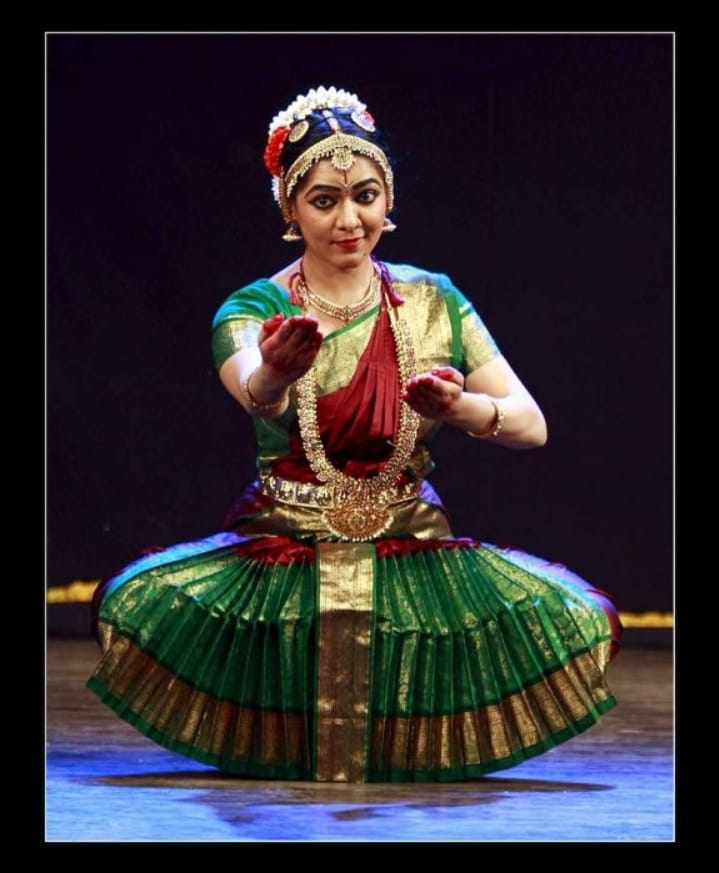
In Indian classical dance, however, the evolution of male and female roles in dance was far more complex than in any other civilization. In India because of the uninterrupted history of dancing sculptures, we always associate dance with women. Even our ancient texts speaks about the ideal ‘narthaki’, how she should have a slim waist, the neck must be long, the lips must be perfectly proportioned, attributes that adhere to a male eye looking at a female body. The majority of Bharatanatyam dancers are and have always been women.
Interrelation

The interrelations of art and religion have played an important role in male-female participation in dance but in extremely complex way. The female monopoly in Bharatanatyam in South Indian society where the Lord of dance is the male dancer Nataraja who defeated the female dancer Kali.

Bharatanatyam was no place for the regular middleclass layman. It was something which almost unintentionally became barrier between hierarchies, completely contrasting what “ART” stands for, unity.
REASONS

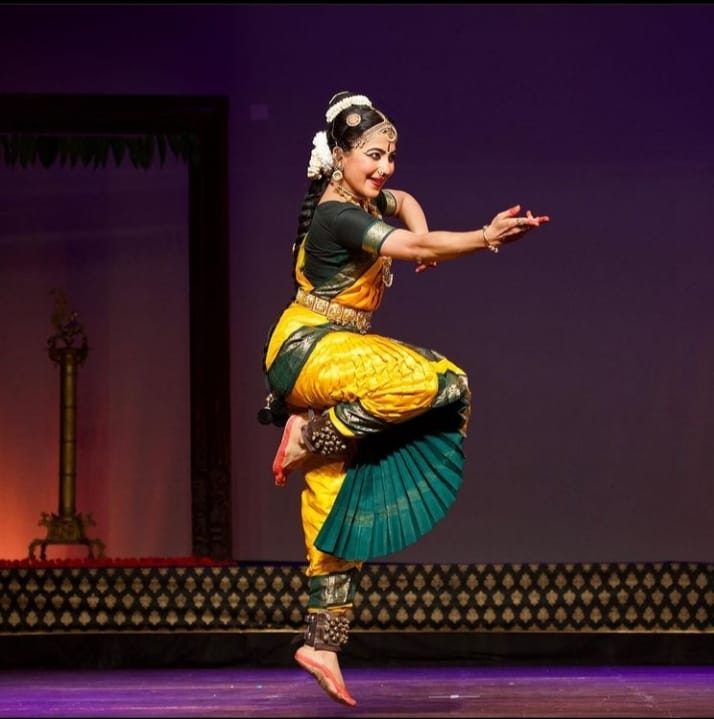
The male dancer has few opportunities than a female dancer within the field of classical dance alone. Perception of male dancers in India: Male dancers are more accepted and ‘used’ in group works. Due to the above perception, there is less opportunity and there is discrimination at both national and international level. At some quarters dance is still regarded as ‘sissy’ and so male children are not encouraged to take it up. The monetary factor is still one of the major deterrents for men to take dance as a profession. In fact, most families don’t encourage this pursuit, dance doesn’t yield adequate monetary gains. There is also this superstitious fear in the minds of parents that their sons would end up being effeminate if they become dancers.

Sooraj Subramaniam a professional Bharatanatyam, Odissi, Kathak, classical ballet and contemporary dancer says his opinion about the lesser male dancers in Indian dance styles, he says, “In classical dance the performer is an ambiguous entity, charged only with the task of creating a transcendental experience. Gender is a by-the-by, mostly inconsequential to the philosophy of the dance, this sort of ambiguity isn’t easy to digest, especially when our societies are obsessed with clarifying things into neat binaries. It takes extraordinary patience to appreciate the sort of subtlety that the classical arts are concerned with, and it demands a lot of investment from its practitioners and spectators.

There’s also a culture laziness when it comes to encouraging dance, which is seen as an emotional and aesthetic pursuit.”

Revolutionaries

There are these men out in today’s world who are breaking this stereotypes:
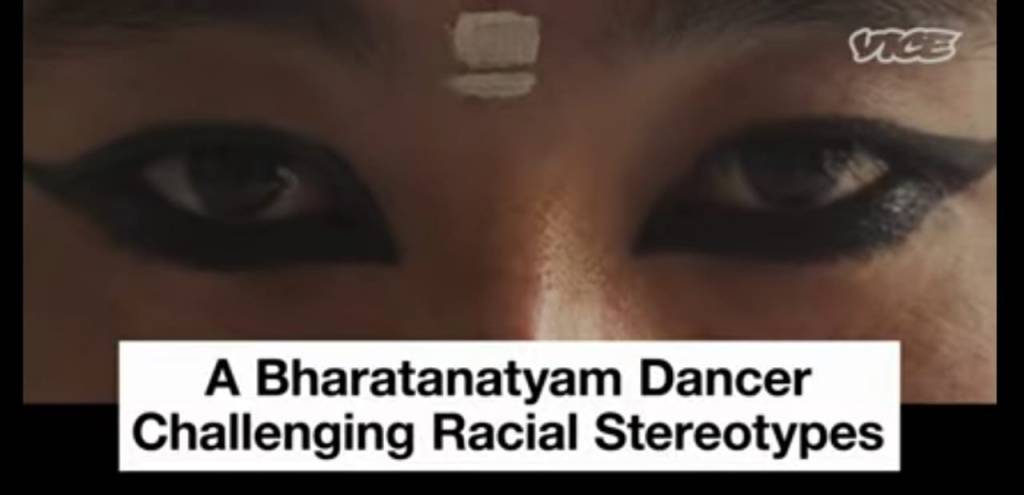
Charles Ma is a Chinese-Nepalise-Naga Man who has embraced as a professional Bharatanatyam dancer and teacher, he is walking beyond the classical idiom.  Born with mixed-race origin, Nepali-Chinese, he personally embraced total Indianism, growing up in Bengaluru (a city that was a cultural hub) also played a key role in framing him as a dancer.
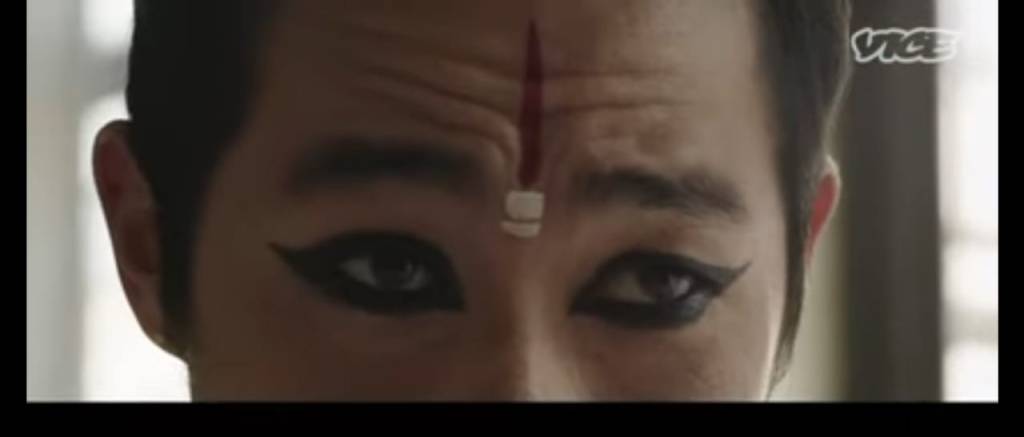
He overcame all his barriers of gender, class, caste, race and emerged as a successful artist. He says, “if I Danced, I would dance like a man. Male Bharatanatyam dancing has its own beauty. Its strong and geometric.” He adds back then, the few boys who took up the art that was predominantly meant for women, were made fun of and called gay, he was even made fun of his being an outsider, but such racial discrimination has never put Charles down.
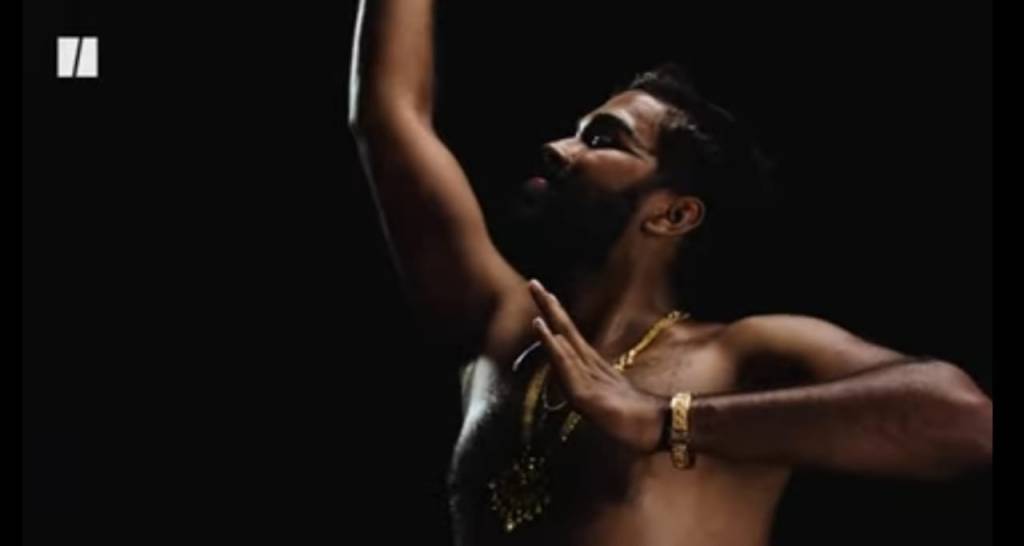
Here is another man breaking the stereotypes in Indian dance. Jeeno Joseph is an Indian Classical Dancer, at the age of 5, he started learning Bharatanatyam. But under the stigma of being a male in a predominantly female art, he gave up his dream. Being a catholic also was the biggest hurdle for him to choose his dream as the art was based as a Hindu background. After years , he fought back against traditional societal beliefs around masculinity,  as well as his own insecurities, to rediscover hhis passion and continue dancing today. 

Women in the field

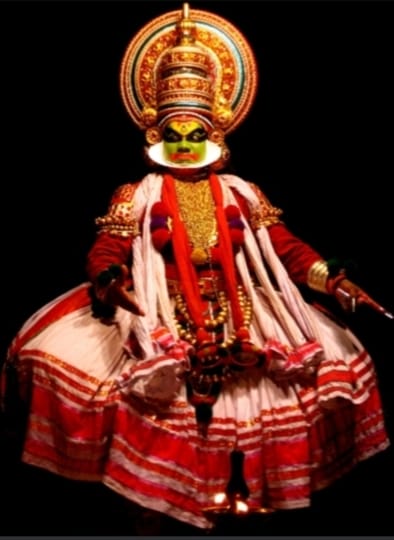
The paradox of male monopoly in the dance-drama traditions of Kathakali (with male takin female roles) and Yakshagana, derives from a convoluted priest-versus-dancer rivalry and ritual-versus-art conflict. Women are totally omitted from kathakali literature. Chances of the performance of female artists are very scarce in male-dominated troupes.
Reasons

 Enacting male roles demand strenuous physical maneuvers and sustenance for performance that last for long hours of the night, in addition to emotional barriers of utmost care at the subconscious level to overcome their inborn feminine performative language elements like grace, submissiveness, hostility, etc. also there are physiological resistance and limitations. Also casteism played a major role and gradually Kathakali grew popular as an art for upper caste people.
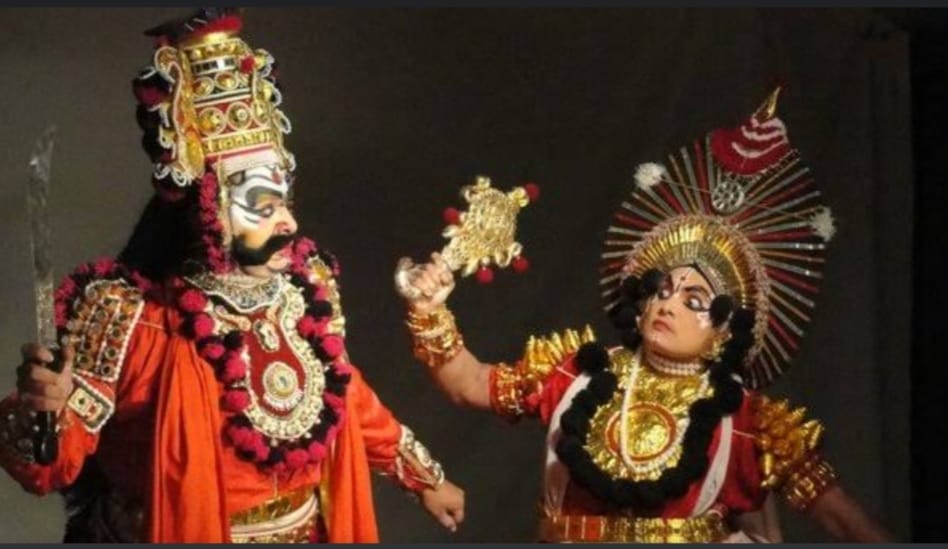
But women are taking deliberating efforts to perform the paly that are physically strenuous. they have proved that nothing can stop them from making efforts. A whole new generation is coming up as competent artists and they don’t want to make compromises in their artistic freedom. This has created a positive outlook and acceptance from the critics.

Conclusion

In short it follows our account that gender monopolies in Indian classical dance have depended less on internal aesthetics or religion prescriptions but more on a variety of competing and converging socio-historical factors, sometimes under the guide of religion or reasons of state. In course of time Bharatanatyam has gradually produced its own male dancers, Conversely Kathakali has done it a little more slowly and on the other hand Yakshagana is still in the way to accept the new change in the art of this generation. The increasing popularity of dance-drama has played a major part in this rational outlook on male and female roles in classical Indian dance.

Recommendation:

Book:

Gender monopolies in Indian classical dance: a sociological analysis of cause and context http://indianculture.gov.in/gender-monopolies-indian-classical-dance-sociological-analysis-cause-and-context

Sources:

“Bharatnatyam: A feminist approach” https://qrius.com/bharatnatyam-feminist-approach/amp/

“When men danced as women: An ancient tradition on the decline | The News Minute” https://www.thenewsminute.com/article/when-men-danced-women-ancient-tradition-decline-36193?amp

 “‘Dance needs to be gender neutral’” https://www.deccanchronicle.com/amp/131216/lifestyle-offbeat/article/%E2%80%98dance-needs-be-gender-neutral%E2%80%99

Fight Club: The Ultimate Guide to Masculinity.

By Manav Chauhan

*WARNING*

“Fight Club” being the most controversial movie on men’s rights due to it’s excessive violence and wild twisted ending, became a hot topic in the manosphere since it’s release in 1999. For those of you who don’t know what I’m talking about, let me tell you more about it. But first buckle up your seat belts, it’s hell of a ride ahead…

Let’s Fight!!!

Introduction

Fight Club was a 1999 American film directed by David Fincher starring Brad Pitt, Edward Norton, and Helena Bonham Carter. It was based on the 1996 novel ‘Fight Club’ by Chuck Palahniuk. Norton played the role of the narrator, who is not satisfied with his job. So he forms a group named “fight club” with a soap salesman Tyler Durden (Brad Pitt), and becomes engaged in a relationship with a destitute woman, Marla Singer (Bonham Carter).

Above lines are the simplest explanation I can give you on the film. But as you see, things don’t go as monochromatic as described above (in the movie).

Box Office

Fight Club failed to meet the studio’s expectations at the box office, and received polarized reviews from the critics. It was quoted as one of the most controversial and talked about films of the year. The film later found commercial success with its DVD release, establishing Fight Club as a cult classic causing media to revisit the film once again. In 2009, on the tenth anniversary of the film’s release, The New York Times dubbed it the “defining cult movie of our time”.

What actually happens ?

Plot: Twisted!

Edward Norton (actor) who’s “The Narrator” of the movie plays the role of an office worker who is discontented with his boring life, suffers with sleep apnea and insomnia. He is sleep walking while working, working while sleeping, and doing whatever we do in our day-to-day lives in a semi-automatic mode controlled by his brain. He is not aware of his surroundings. His brain creates scenes which he confuses them with reality. He questions the very origin of the circumstances happening around him. So in order to cure his sleeping cycle he starts attending support groups which he thinks are helping him from his psychotic disease in the form of a therapy. He starts attending support group meetings for blood parasites, testicular cancer and whatever he finds useful for his insomnia. Although he doesn’t have any problematic disease mentioned above but crying and relieving his office stress (generally happens in such meetings), he finds it easy to sleep at night and gets his full natural sleep without taking pills which he used to take before. 

In one such meeting, he meets Marla (Helena Carter) who, like him, is also a fake attendee. She is neither a victim nor a survivor but still attends to get free food. This thing annoys him and he confronts Marla. Both blackmail each other to expose the other person. After a long verbal brawl they come to a conclusion they’ll split the week and the meetings. 

*Note: We are all Jack here. There’s a reason I’m saying this which you’ll only understand after watching the movie.

Now his life actually changes when he meets Tyler Durden on a flight home. 

The interesting part beginnns!!!

The Narrator (Jack) is impressed by his charming personality and useful information which they share along the way. Jack asks questions to Tyler and gets to know a lot of things about him. His not giving a f*ck attitude, boldness and usefulness. Tyler is so useful that he can actually make explosives with household items!!! He is bold and ambitious. He takes whatever he wants. Isn’t afraid of the crime, murder or poverty. Such things don’t seem to concern him much. In short Tyler has no rules, no limits, no breaks either. You either follow him or are against him. Just like a jungle, he’s the wolf, he’s the lion. Kill for a kill. He lives in an old house which was ruined almost a century ago. He doesn’t care what he wears either. By the way, he makes and sells soaps for a living. Both get along after a few conversations and decide to start the Fight Club.

Tyler Durden: A Sigma Male

According to him (to every man reading this), “Man, I see in Fight Club the strongest and smartest men who’ve ever lived. I see all this potential, and I see it squandered. God damn it, an entire generation pumping gas, waiting tables – slaves with white collars. Advertising has us chasing cars and clothes, working jobs we hate so we can buy shit we don’t need. We’re the middle children of history, man. No purpose or place. We have no Great War. No Great Depression. Our great war is a spiritual war. Our great depression is our lives. We’ve all been raised on television to believe that one day we’d all be millionaires, movie gods, and rock stars, but we won’t. We’re slowly learning that fact. And we’re very, very pissed off”.

Meaning: Evolutionarily, men were developed and evolved to hunt, to fight, to kill, to survive only by the force of their own muscles and instinct. They were the providers for their families, tribes, and societies, and thrived in a state of struggle and warfare against each other and nature. Naturally, their bodies and minds developed to reflect this reality, and even down to a neuro-chemical level, they derive value and meaning from such a way of life.

The modern world has completely removed this aspect of life and replaced it with soft, decadent, dissolute, little-hearted, consumer capitalist men. Not only are men not supposed to be violent, aggressive, and driven by their very real biological urges, but they are told that these aspects of themselves are barbaric, evil and worthy of condemnation and punishment. The term misogynist is used frequently for such men to oppose them.

*Note: This is called psychological emasculation of Men.

*Solution: Be Tyler. Period.

But but but, the aim of this philosophy is to take out the best from the men. It means and states no harm to other genders and especially women. Women are an integral part of the ecosystem and Tyler understands this too.

*Attention please: 

I’m limiting this article to only the storyline because the movie “Fight Club” is really very complicated and cannot be articulated into a single article. Plus I don’t want to give spoilers. There are many more philosophical quotes and scenes in the movie but I’m restricted by the word limit or else I would have elaborated more on the movie and the current reality but no worries!! I’ve still got you. Checkout the links below for more information.

General FAQs you might want to clear up after reading this article.

  • Why should I watch Fight Club ? (Well there’s no reason. It’s for your benefit).
  • Who is a Sigma Male ?

https://www.google.com/amp/s/brightside.me/inspiration-psychology/who-sigma-males-are-and-why-theyre-so-popular-800914/amp/

https://www.sigmamaleforum.com/topic/165-famous-sigma-males-in-movies/

  • Tyler Durden’s Complete Character Analysis (why he does what he does).

https://fightclub.fandom.com/wiki/Tyler_Durden

  • Tyler Durden’s Philosophy

(Complete guide to the above mentioned statements)

https://www.google.com/amp/s/dormin.org/2020/01/22/the-philosophy-of-tyler-durden/amp/

https://www.goodwinsmith.co.uk/blogs/news/how-to-give-less-of-a-fuck

  • Emasculation of Men: Suggested Books.
  • What is The “Übermensch Concept” by Friedrich Nietzsche ?
  • What is Nihilism ?
  • What is the Manosphere ?

https://en.m.wikipedia.org/wiki/Manosphere

Final Verdict

This is not the end. It is the beginning!!!

And don’t thank Me. Now go and watch the movie! I tell you it’s worth it.

Image Sources: Google

Real Feminism VS Pseudo Feminism on Social Media

  • Mohit Bhoite & Tanvi Vishwakarma

Hello readers, today we are going to talk about Real feminism Vs Pseudo feminism on social media, we all know that today social media is the best platform to spread something, anything can go viral in seconds doesn’t matter if its positive or negative information. Feminism and feminists are adapting according to trend and they made their way to social media and spreading the word for Equality but as bad comes with good there are some pseudo feminists also who just want clout by posting negative content.

NAREEVADI- THE HOT DESI TADKA

Nareevadi kya hai?

If we talk about feminism in Indian context, there are several meanings to it. In simple terms, it means women demanding rights equally to men.

‘The Hot Desi Tadka’

This is used sarcastically because stereotypically women are objectified as a sexual object and believed that they belong to kitchen, so let’s taste the new desi tadka.

Let us talk about some famous Instagram pages that are made in india, we have a lot of tea to spill.

  1. Shethepeopletv

This is exactly what the page looks like.  The page aims every single issue associated with misogyny and gender stereotype. From addressing the former to giving out their opinion, the page has everything to deal with.

  • Bebadass

Modern Nareevadi kya hai?

BeBadass is an Instagram page and an organization which encourages Real feminist’s who really want to work for society and empowers them, lets us take look at some posts.

As we can see in this post that there is no definition of beautiful and so called ‘perfect body’. They also post about women who are working towards upliftment of the society and more.

For some people the concept of feminism is not clear yet, feminism is a social political moment that was started for quality among all the genders and sexes some misunderstood it as ‘Only for women’. The base of feminism that it has started for women who has faced atrocities and has no equal rights, In India there are a lot of figues which inspires us Savitri Bai Phule, Prathiba Patil etc. are empowered womens who has done a lot for country.

Pseudo Feminism

There are feminists and then pseudo feminists come along, pseudo feminists are the people who thinks that only women deserve all the rights and they don’t want equality they just want women to be empowered. Nowadays pseudo feminists just post nudity on their social media accounts to gain clout. No content about empowerment and equality, showing body is feminism according to them.

Let’s check some social media accounts

1. Nikita Yadav @nikitayadavvv

In this post it was video of Nikita Yadav and Komal Pandey wearing garbage bags, in the caption it is written that they are breaking a stereo type which is not making any sense, how you can break a stereotype by wearing a garbage bag which is not even creative, and they call themselves feminists.

There are a lot of blind followers and pseudo feminists who follow them and encourages this act.

Same Nikita Yadav posted a video on her social media naked and said “Mujhe kapde peheneko mat bolo, logo ko mask peheneko bolo” Spreading awareness about wearing mask is good but why this pseudo feminist connects everything with body? Are they out of content?

Now it has become trend among pseudo feminists to post half naked pictures in name of freedom and awareness.

2. Moose Jattana

She calls herself an activist she was also a part of farmers protest and a lot of protests. She is a NRI and lives in Australia and is famous for mocking religions and men without any reason, recently she was fed up in a controversy where her inappropriate video got viral as she was calling it women empowerment a lot of Real feminists slammed her.

This pic was uploaded on Instagram handle of Moose Jattana which shows Maa Kali a Hindu Goddess is wearing mask and crying and written on it ‘Fight Beti Fight’ and we can also see a comment where are girl is saying that how this pseudo feminists everytime target only one religion.  

We all know that social media has some limitations as Slacktivism, it can be used to start a campaign but that doesn’t last for long time there are millions of users on social media some spread positivity and some spread negativity. There are a lot of feminists who are working really hard for equality and upliftment of the society but due to some pseudo feminists they are getting hate. There are some feminists who are working towards making internet a good place to spread the words but some pseudo feminists spoil it, this new generation only wants clout and they are willing to do anything for that, some feminists understood feminism as showing body only, and at end of every debate they say ‘Because we bleed’ this is not the answer for every argument.

In conclusion we hope that people follow some mature and real pages that will help a person who is really working hard for to make this world a better place.

Anurag Kashyap Movies and it’s not so Stereotypical Women

By Khushi Goswami

Anurag Kashyap’s films are bold, harsh and realistic. While his films are based on notorious gangsters, and chauvinistic men, he has never failed to represent his female characters boldly. While many Bollywood directors forget that women exist in their movies, Kashyap chooses to address this misogyny not only in the industry but also in society through his movies.

DEV D:

Dev D Kashyap’s most loved and famous film is a modern take on Sarat Chandra Chattopadhyay’s novel Dev Das. The film addresses the sexism that people failed to notice. Dev’s character is shown to be arrogant, aggressive and mannerless even as a kid. His treatment of Paro (his girlfriend) is hypocritical. While he cheats on her by having sexual relations with another female, but upon hearing rumours about Paro, he demeans her and gets aggressive, without giving her a chance to explain herself.

After facing such humiliation from someone whom she thought loved her, she goes back home upset. Once home, she takes out all her frustration on a hand pump. Yes, it may seem funny but it is one of the most powerful scenes in the film. She does not stop pumping it even after the bucket is full, taking out all her anger, humiliation and sexual frustration on it.

While Paro moves on from Dev and gets married, Dev in his sadness of losing Paro takes refuge in alcohol and drugs. It is then he stumbles upon Chanda (Chandramukhi).  Chanda aka Leni was in 12th when her life starts falling apart. Her much older boyfriend film’s her during their sexual escapade and the tape gets leaked. From here on Leni’s life takes a disastrous turn. Her father commits suicide out of shame. She is sent to her grandmother in a rural village where she is slut-shamed.

Not wanting to give up on her studies Chanda goes back to Delhi where she gets into prostitution. Unlike what we see in most Bollywood movies, Kashyap’s portrayal of sex workers is a way to humanize them and remove the stigma around the profession. Chanda is given support by these people and because of them, she is able to complete her 12th and her college.

Chanda is an independent woman who helps Dev but does not make him the sole purpose of her life. These two women don’t stand up to the general standard of Bollywood where if a woman loves a man she will accept him and take care of him no matter what. Paro stood up for herself against Dev’s chauvinistic and misogynistic manners and Chanda made a life for herself when everyone thought it was over. Thus, Dev D is considered to be one of Kashyap’s best films, which was way ahead of its time.

GANGS OF WASSEYPUR:

 A film that is male-dominated yet; two women stand out in it. Huma Qureshi’s Mohsina Hamid speaks her mind out without any fear of her gangster husband, who is one of the most feared men. In a scene where Faizal Khan her husband makes a move and holds her hand, she scolds him and asks, “Permission liye aap?”, leaving him dumbfounded. She is a woman who owns her sexuality and speaks her mind, without any shame or fear.

Richa Chadda’s Nigma Khatoon, is a victim of the patriarchal world. Her husband has a large sexual appetite, which he takes out on her. This leads her to get pregnant several times.  He cheats on her and also gets married a second time.  Even after so much suffering, she continues to live her life.

THAT GIRL IN YELLOW BOOTS:

Ruth played by Kalki Koechlin is a British woman who comes to India in search of her father. She faces a world where she has to bribe her way out of every situation and where several men take advantage of her. She works as a masseuse who at times provides her clients with ‘happy endings’. Her boyfriend takes advantage of her several times. The movie ends on a shocking note, where Ruth finds out that her father was one of her clients, who knew all along that she was his daughter.

Although Ruth’s character takes a backseat and is not as strong, the movie does not fail to portray the patriarchy and misogyny in the society.

QUEEN:

Queen was produced by Kashyap and is an all-time favourite. Rani is a meek, sheltered woman from Delhi who was going to get married to her boyfriend Vijay.  One day before their wedding Vijay tells her that he cannot marry her as he has changed after his time abroad. Shocked and saddened by this Rani lock’s herself in her room. After crying over her situation for hours she decides to take matters into her own hands. She decides to go on her honeymoon alone. While on her trip she makes close bonds with men and women both. She explores her newfound independence and realizes that there is more to her life than just being someone’s wife. When Vijay gets to know that she is in Paris he asks her to meet him. During their meet, he asks her to come back to him, but much to his dismay she refuses. She frees herself from the restrictions imposed on her and decides to live life on her terms.

Shop casual, kanganaranaut, queen, dress on SeenIt - 42343

What we can decipher from these movies is that, while Anurag’s most movies are male-centric, he does not forget that women exist for more than just to be sexualized and are not mere damsels in distress. You can count on Anurag Kashyap to portray things as it is. He does not shy away from the harsh realities of society and his films may not always be a success at the box office but they are films that relate most to today’s reality.

One Indian Girl – Does it portrays the Feminism right?

By : Shruti Tyagi

One Indian Girl is the seventh novel by Best Selling Author ‘Chetan Bhagat’ and first of its kind. This novel o Chetan Bhagat deals with the question, ‘what’s the need of Modern Indian Woman’. His previous works dealt with Love, Corruption, Dreams, Superstitious, Rage, etc. This time Bhagat pens down a female as his protagonist, to raise bigger issues such as equality in gender, feminism, liberalism, society verses individualism and humanism. The Character Radhika Mehta is a well Educated, well placed independent Indian girl who fights the stereotypes of the society and learning from her very own experiences. Ended the novel with a climax which is uncommon and rebellious and leaving people unaware of the final outcome, the marriage. Will she marry or not.

One Indian Girl talks about the story of 27 years old Radhika Mehta, daughter of SBI Branch Manager, Sudarshan Mehta and homemaker Aparna Mehta who is a vice president in the firm of an investment bank in which she earns in millions.

Story revolves around her exes Debu and Neel Gupta and an arrange marriage in Goa with Brijesh Gulati who himself works in Facebook to whom she met on some matrimonial site.

Her first love Debu, someone who is insecure of the fact that her girlfriend earns way more than what Debu earns and a person who can’t live by the same fact. And from a loving and caring boyrfriend to someone who went jerk. The first guy in her life who introduced her to romance and make her feel guilt of the pleasure she was unaware of and the fact that she realized that she has spent her entire teenage and early young age being unaware of such blessing.

Getting over Debu was difficult for her, considering her very first heart break ever. Which made her shift to Hong Kong to refresh her life and getting better at her professional job. That’s where she met her married 40+ old boss, Neel Gupta. Who took her to places on the note of office mettings. Where she got her interest in his fitness and personality even at that age who comes with maturity. When she got hit by a Casanova and later got intimated with him turns out she went to the guilt trip later. And made her left the job again.

With the progression of the story, reader will come to know the two versions of Radhika, the perfect daughter, sister, lover, bride to be and dedicated professional with sweet lies and on the other side her eternal critic the Mini me, her real self with bitter truths. Reader can easily bond themselves with the Mini me as everyone has a voice of an inner consciences and only few dare to live by that.

Interestingly enough, this is a novel defines feminism from different angles where protagonist’s anti-feminist mother plays a very interesting role to highlight this big issue with the help of her humorous and witty comments in every possible manner.  Reader will definitely enjoy reading her remarks and can easily match them with their own personal experiences of being the part of Indian family. Writer certainly wants to unleash all the sealed Stereotypes of ‘being Indian’ such as prejudgemental tendencies, wrong assumptions, deceptive tactics and all the emotional blackmailing done by Indians for the name of ‘customary protocols’.
In this novel, Bhagat seems to be inspired by E. L. James’s Fifty Shades of Grey as his bold narration of the intercourse between Debu and Radhika is making it not only romantic but also erotic and sensuous at some extent. It looks like an anatomy class for the readers also as they will read the phrases like ‘Grabbed my breasts’, ‘kissed my nipples’, ‘pulled down my panties’, ‘entered me gently’ and ‘tongue had felt better’. And the closing lines after sex is very challenging to declare but Bhagat’s Radhika does it by saying, “I would be rather a spent and finished slut than a good but frustrated Indian girl”.
Once again, Chetan Bhagat is unable to come out from her liner creativity as reader will again experience a typical mom with her sexist remarks, an investment banker story, love traps and the two states differences and now this time it is Punjabi and Bengali community. The title, ‘One Indian Girl’ is capable to mystify the readers as it is expected from the writer to be more realistic in approach because Indian society is harsher in reality and mostly escape and denial are not that simple where burning brides, female feticides, acid attack victims and honour killing victims are in the news all the time.
By reading this novel, reader will get the clarity about the real meaning of true independence is that one is not answerable to anyone but oneself and one should not go by the society’s versions of what is moral, ethical or right. Individual has a thought process and they should not only think for themselves but also question everything. Individual should be answerable to his/her consciousness without justifying things unnecessarily to anyone. Don’t suppress your uniqueness to maintain normalcy. This is the moral of the story and massage of Chetan Bhagat to every Indian Girl so that they can feel proud on themselves.  At last, as a reader loves to find the answer of that so called cliché question by replying that ‘what women really want is the option not to choose between what they actually want because they deserve all’.

Dil Dhadakne Do: Blog

By: Kinjal Joshi

“AGAR KOI ALAG TARAH JEENA CHAHTA HAI, TOH USSE JEENE DO

HAR DIL APNI TARAH DHADAKTA HAI, HAR DIL DHADAKNE DO…”

  • Overview:

     There are a lot of movies which show us the exact way of how women are treated in Indian society. One of which is Dil Dhadakne Do. The movie was directed by Zoya Akhtar and released in 2015. The movie shows the reality of Indian families. It also portrays the gender issues faced by the women of India before and after marriage. 

     Dil Dhadakne Do is one of the Indian movies which can be called as an eye opener for narrow minded people in India. The movie starred the Mehra family; Kamal Mehra, Neelam Mehra, Ayesha Mehra and Kabir Mehra. Movie also has a star character, Sunny Gill. Movie portrays a rich and stereotyped Indian family who are celebrating on a cruise with friends and family. 

  • The Forceful Marriage:

     In the movie, Ayesha Mehra is daughter of the Mehra’s and is married to business tycoon Manav Sangha. Ayesha’s father married his daughter without her wish because she was in love with Sunny who was manager’s son of the company Kamal Mehra owned. So, Kamal Mehra sent Sunny abroad to study and stay away from his daughter. The issue here is about the independent choice of a female. If a female is born in Indian family, she will have to learn how to cook, study and get married to the guy her family chooses. The same happened with Ayesha. Her father didn’t want the family name to get spoiled and it would’ve been so if Ayesha married a manager’s son because she belonged to a rich class family. So, she was forced to marry a guy who was rich and successful of her father’s choosing. In India people have established faith that the family chooses the right guy and females have no right in choosing her life partner.

  • Lack Of Support:

     Ayesha had sold her jewelry and started her own company after marriage because she was an ambitious woman and had goals. This shows us how hard it is for a woman in India to pursue her dreams. The focus in this matter is that no one from her own family supported her or helped her financially to start a business because it was not expected of her. As being an ideal Indian daughter-in-law she was supposed to look after the husband’s family and the household. Manav’s mother taunts Ayesha all the time about not staying at home and constantly working in the office. This is what actually happens in India. If you’re not physically tortured, you’re mentally harassed by the people around you and the family you live with for not living up to their expectations. Ayesha had the right mind for business and was capable enough but neither her family supported her nor her husband. She established her own company and made her company one of the best companies in Mumbai. The power women hold when they have goals can do wonders in the world.

  • Inequality Between The Siblings:

     On the other side Kabir Mehra, son of the Mehra’s who is not so capable of handling the business was given responsibility of the whole company. This is noteworthy because the daughter who is far more capable than the son, is not given an opportunity to prove herself in her own company. But the son who is not even interested in the company, is offered the same on a silver platter because daughters are not considered as a member of the family she was brought up in after marriage. Why are daughters supposed to leave their own house after marriage? Why is she not included in the matters of her own family she grew up in? Indian rituals are cruel and separates a daughter from her parents and a sister from her brother. She has to leave all her bonds behind just to live with a complete stranger she doesn’t even know who is chosen by her own family. The answers to the above questions carry so much weight that drowns all the females who ask them.

  • Authority Of The Husband:

     Another noteworthy instance is when all the adults are sitting in the bar and Sunny started a discussion that women in our country are not safe and are not treated equally. Manav opposed and said changes are done slowly. Further Manav argues that no women in his family has ever worked in office but then he allowed Ayesha to work. So Sunny explains that when you give Permission to someone, you are putting yourself in a position of authority which is not called being equal. Sunny also says that why does Ayesha need to take permission from her husband to work? She is an independent woman and if her husband didn’t take permission from her to work, she shouldn’t too. This scene has a huge impact and all the females who have seen the movie must have felt a great deal of pain. Indian women are bound to the kitchen and the household works. They don’t get time for themselves. And when females gather courage to pursue their own goals and fights for equality, society clips their wings and drags them down so they can’t fly. What a shame! 

  • The Divorce Taboo:

     Last but not the least issue is about the divorce Ayesha wanted to give to her husband. She wasn’t happy in the marriage because she wasn’t in love with her husband. And when she finally gathered courage to get a divorce after a long time, her own family denied. Her own mother was against it as divorce is considered a taboo in Indian society. Her father pressured her to stay in the marriage even after knowing that she was unhappy because he thought about what society will think about her. Kamal Mehra even threatened her own daughter that if she gets a divorce she can’t come back to her father’s house because that wasn’t hers anymore. How pathetic Indian parents can be! They are ready to make their daughter suffer her whole life but they won’t support the daughter who wants to achieve something, who needs support. 

  • Farah And Noorie:

     Farah is the love interest with Kabir Mehra in the movie. She is a dancer on the cruise. She wanted to be a dancer and her family was very conservative and didn’t have money for the professional training. So Farah took her bag and left her home and worked hard. She was a bartender for some time then she worked at other places and gathered money for her dancing fees. Finally she went to dance school and fulfilled her dream alone all by herself. Kabir called her FEARLESS FARAH which I think suits her perfectly. Farah’s journey shows us that it might be difficult, the journey; but it is worth all the pain.

     On the other side Noorie was daughter of a successful businessman Lalit Sood. Noorie was engaged to another guy but he left her and a lot of people talked about her family. On the cruise she fell in love with his father’s rival’s son Rana Khanna. Noorie and Rana were instructed to stay away from each other because their families didn’t like each other. So, they met secretly in a way that nobody can know. This shows the dilemma of Noorie that she has to hide her real feelings from everyone because her family didn’t like the guy’s family. Most of the time this thing happens with females in India. They are not allowed to marry the guy of their choice. But still Noorie fought the odds and didn’t leave Rana’s side. She tried to save her love.

     Thus, the point is proved that Indian women are tied up in chains. They need to ask for every single thing they want to do and have absolutely no authority in the house which is the complete opposite of treating equally. Women are powerful enough to rule a country so they are powerful enough to rule their own lives! Freedom is not enough for females in our country. Support and love is also needed. The same support and love that sons are receiving should also be given to daughters so that they can pursue their dreams and goals!

Gender Representation in South Indian cinema

-Akshit Mayur

“Entertainment and art have the power. Our culture is molded more so by entertainment than any other influence”

The origins of entertainment have developed to varying degrees throughout history; skits have evolved into plays, plays have evolved into theatre shows, theatre shows have evolved into film, and so on. But how much has the role of gender in a story has changed?

Men are portrayed with characters that meet society’s definition of masculinity while female roles are reduced to misogynistic ideals. As a result, the lack of equality both on and off-screen has raised questions on gender stereotyping, the quality of media being viewed by the public, and the misinterpretation of a balanced society.

Several films enforce their views on the perfect woman, often through supporting characters—they play love interests or indulge in careers that seem ‘nurturing’, coming off as frail and submissive beings with very little room for thought and argument. Besides being a far cry from reality, such films create an inaccurate impression of the capabilities and interests of women and thus indirectly plant the seeds of inequality in the minds of people.

Several films use supporting actors to impose their opinions on the ideal woman—they play love interests or pursue professions that seem to be ‘nurturing,’ coming across as fragile and submissive creatures with no space for thinking or debate.

Other than being far from fact, such films provide a misleading picture of women’s skills and desire, thereby implicitly sowing the seeds of injustice in people’s heads.

The viewer’s eyes can be used to monitor the evolution of women in the Tollywood industry. The representation of women by film fans and others has helped determine limits both on-screen and behind the scenes, influenced by factors such as politics, economic structure, and history.

Given the unrealistic values depicted in many films, as well as the lack of female representation in the industry, it’s no wonder that the Indian film industry is frequently regarded as a male-dominated setting. According to a 2017 survey, only one out of every ten Tollywood directors is a woman. Other figures show that female actors got very less percent of the screen time, compared to male percent for screen time.

Male/Female screen time distribution ratio.

Female characters in Tollywood have been viewed through the lens of a predominantly male viewpoint due to the difference in the number of men as opposed to women in key off-screen processes such as script-writing, film-making, and directing, resulting in the age-old assumptions and gender disparities that exist in films.

Cinema has become the most common mode of leisure and entertainment due to its ease of accessibility. With nearly billions of people swarming the big screens, the Indian film industry enjoys a global audience. In a country where actors surpass their careers to become icons who are loved and admired and adored, it is incumbent on them to clear the film industry of such misunderstandings and misrepresentation.

Arjun Reddy

Arjun Reddy, one of the year’s highest-grossing films, was criticized for portraying an abusive relationship as a means of love, and for portraying the main character, Vijay Deverakonda, as an arrogant man-child who treats his lover like his own property.

Reddy, the ultimate example of toxic masculinity, but he is forgiven in the end, and reclaims his woman. The box office performance of such an outspoken glorification of sexism demonstrates how much we already have to go. The majority of Tollywood romances have always been purely about male lust, despite women having no entity beyond themself.

Dear Comrade

After such a long time, even though it was just a little one, we saw change in the south movies as well. Films like Dear Comrade does an excellent job of portraying women as characters. Women in the film aren’t only relegated to being the male protagonist’s love interest. But she has her personality, dreams, and sense of purpose.

In most southern films, the female character can be replaced with some other character because she is only there to serve as the protagonist’s love interest, but dear comrade does not follow the same pattern.

Kanchana

Kanchana, a comedy/horror film, is also a good example of a film that seeks to present different genders in a positive way. The film attempts to depict the social rejection of transgender people in Indian society, the atrocities they face on a daily basis, and how those around them mock them and refuse to consider them as equals.

To summarize, things are not common in the Tollywood industry in general, but improvements are occurring over time. The general public, who absorbs material, is being increasingly updated on issues such as gender discrimination, screen time representation, and so on.

As a result, shifts are occurring cautiously but steadily. So, it will take time, but as viewers, we can still respect films that support ideals of other genders in addition to the male lead, as well as films that attempt to promote gender neutrality.

Thank You.

References: –

Source 1: – https://www.unicef.org/india/what-we-do/gender-equality

Source 2: –https://www.researchgate.net/publication/279017811_Changing_Roles_of_Women_in_Indian_Cinema

Source 3:https://www.ukessays.com/essays/india/depiction-of-women-in-indian.php

Source 4: – https://themitpost.com/women-indian-cinema-tale-representation/

©All the Pictures were taken from DuckDuckGo and Google.

IS IT SEXIST IF IT IS VIRAL?

By Nilanshi Jain and Mehak Pampaniya

Posted on 16 May, 2021

Surely, we have changed our age-old conception of ‘Beti paraya dhan hoti hai’ to ‘mahari choriyan choro se kam hai ke’. If there is ‘tum to bade heavy driver nikle’, then we have a ‘hum pawri kar rahe hai’ too. The social media platforms are flooding with meme content every single day. They enjoy a soaring viewership among the youth. Scrolling memes after a tedious job is how an average teenage functions. They are light-hearted and rejuvenating. But in the face of amusement, are they justifiable in reality?

Elections are a political process and here too the personal lives of women are brought into the public forum which have nothing to do with them. Even if they are related to politics, they are treated inferior and addressed with reference to pre-existing societal beliefs about women. If we talk about memes on 2021 West Bengal elections, there were many of them on some female politicians who were gorgeous and still lost. They were pointed out by ‘Agar Ye Bhi Nahi Jeeti to Pakka Elections Me Heraa Pheree Hui Hai’. Doesbeauty gather vote bank? Is ‘beti’ still a ‘paraya dhan’, just for the purpose of trolling?

What viral content also shapes is the perception of who is eyeful. There are many memes and reels that comment on this aspect. Every year during the IPL tournament, any attractive female spectator is highlighted by the cameraman who turns out to be a social media sensation, within the span of an evening. The sport becomes secondary here. Also, there is depiction of the dependence on cosmetic products and the aftermath. This brings light to the very fact that in a world where most of our time is occupied by social media, what are the standards of beauty? Is someone only beautiful when a man compliments or desires her?

People raised candles for a 19-year-old Dalit woman who was brutally raped at Hathras. Social media made us, general public, aware of the cruelty which takes place every eighteen minutes in our country. In the pandemic, if there is an auto rickshaw driver providing people with basic amenities, there is a beastly man who demanded sex in exchange of an oxygen cylinder. We have talked about sexism in memes in a very usual sense, but there are elements of it that are very unusual. This is where our reality is heading and it is pleasant as well as disturbing. The only thing that binds us to this reality is awareness. Two sides of the same coin.

scources-instagram

Of course, true to form, the Indian men who have hit back aren’t particularly gallant. Responses – all uniformly ungrammatical – range from obscure (“you girls haven’t met alpha males it seems”) to enigmatically biting (“most Indian women I know have uni-brows and extreme facial hair…”) to melodramatic (“Ladies, this is because men spend their whole salary on your makeup, dresses and are left with nothing for themselves.”) . Regardless of all the values, all men share a commonality — they are capable of eliciting menacing behaviors to others. If you are a woman and have been in a public place, chances are you have been the recipient of an unwanted leer or stare from a guy. Sometimes this staring may turn out to be dangerous.

More people = more creeps. More technology = more effortless stalking.

Character assassination is a technique to restrain women from having agency over their own life. There are things an Indian man wants in his wife. A woman who has “right body”, “who loves like a girlfriend and cares like a mother.” Which basically means, you can go clubbing in a miniskirt, as long as you carry along a hot case filled with khichadi. A wife is supposed to pamper the man, be honest, career-oriented, and a ‘sanskaari bahu’. Well, because “being modern is fine, but a woman who doesn’t follow tradition is strict ‘no-no’”.

No citizen with a phone and internet today has escaped the term ‘memes’- an intrinsic part of millennial culture. But in case you have been living under a rock, memes are those funny images, texts or videos and are spread rampantly over the internet. For anyone who is yet to be properly introduced to feminism, these anti-feminist memes do much harm by spreading negative stereotypes about feminism, and also actively propagate misogyny  and sexism.

This meme, for example, is a completely misguided critique of feminism. Yes, feminists argue against sexism. But no, feminism does not dismiss men’s voice on the subject, it simply asks that men take backseat and listen when women are speaking about their experiences. Isn’t that the whole point? Giving women their own voices?

Humorous feminist memes also thwart the sexist assumptions that women are somehow less funny than men. The hilarity of these feminist memes breaks the stereotype of a serious, morose and pettier than men, while simultaneously bringing a change in the mindset of people and gathering more support for the feminist movement.

These feminist meme channels don’t hesitate to highlight the uncomfortable realties of the society that are often excluded from the real-world conversations because of the stigma attached to them.

The best way to fight humor is with more humor and that’s exactly what feminist memes do! Memes are an effective way of reaching out to millennial and to drive the point home.

B- town’s misogynistic mess

Ek chutki bezzati ki keemat tum kya jaano Bollywood babu, ek aurat k sharir ka manchaha bhaag hai bezzati, pyaar se di hui zillat hai bezzati, patriarchy ka tohfa hai bezzati!

Shruti Jha

If you’re a Bollywood fan, buckle up because you are going to see the ultimate misogynistic adventure. Without any expectation that this blog will change your mind, let’s get in without any sharam or lihaaz as the mother-in-laws of Bollywood say.

Bollywood has been a leader for spreading anti-feminism ideas into the so-called fragile minds of the mundanes. Yeah, I am talking about humans. The bindiya queens or the zandu balm queens, no one cares about what harm their role does to the society.

Toxicity in B-town

To be precise, the so-called B-town feminists are Feminazis. The toxicity in Bollywood has increased to the extent of actresses being hypocritical with their statements. Sonam Kapoor, Swara Bhaskar, Tapsee Pannu and many others were the ones who took initiative in supporting Rhea Chakraborty, who is also a Bollywood actress and was accused for abetment of suicide of his alleged boyfriend Sushant Singh Rajput.

The Bollywood divas stood up for Rhea Chakraborty when she was investigated about Sushant’s death and her involvement in drug dealing.

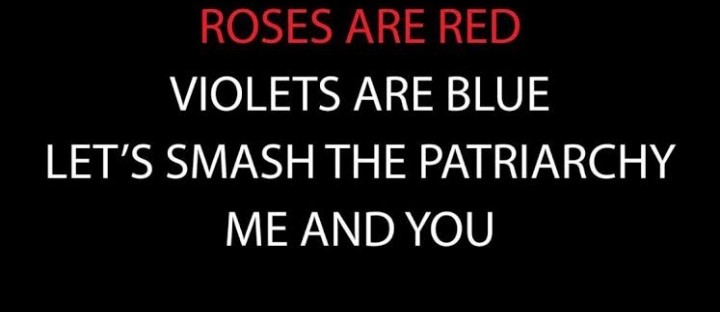
“Roses are red, violets are blue; let’s smash patriarchy me and you”, this quote was there on Instagram story of many Bollywood actresses which is a wonderful effort but there was no patriarchy seen anywhere in the case.

Instagram trend

Feminism in its initial stages was about empowerment of women but gradually it became a broad spread movement not just for empowering women but people from every other gender who struggle and suffer just because of their gender. It is now empowerment of men, women, transgenders, gays, lesbians, queer community, asexual, and many more. The purpose has changed with time but the Bollywood Gen-z has no idea of what feminism actually means today. They talk about patriarchy but in today’s date not just patriarchy but toxic feminism is also dangerous. The toxic mindset of these Bollywood divas has created a negative impact on feminism.

Feminism supports the innocent but Rhea Chakraborty was already found guilty in the matter of drug dealing. Calling them out is necessary is what they believe and so do I. Swara Bhaskar, Sonam Kapoor and Tapsee Pannu, these three played a huge role in this movement as they say but did, they know the truth, no right? Where was #smashthepatriarchy when Anurag Kashyap was accused of rape because, where was #smashthepatriarchy when in the movie ranjhana eve teasing was portrayed as a cute gesture ‘out of love’, where was #smashthepatriarchy when Badrinath ki Dulhania had a scene of alia Bhatt getting kidnapped by the actor ‘out of love’. There’s no #smashthepatriarchy when models get raped, when women are portrayed as fools in the film, when women are shown damsel in distress in TV serials and movies. Where were they then? 

Nope, they were busy shooting for item numbers that sexualize women. Housefull, Kabir Singh, Cocktail, Kabhi Khushi kabhi gam, Grand masti and thousands of more movies have delivered a single message to the audience that Bollywood will always remain under the dominance of patriarchy.

Non-consensual songs and scenes

It’s your boy Badshahhhh! Badshah has bad in his name and thus his songs are full of obnoxiously sexist lyrics that make no sense. His songs are not a problem unless he sexualizes women as patola, ful gulab di and what not. Objectifying them as red velvet cake, makkhan body and use of words lakkha and husn are like his all-time favourites. Bollywood was impressed by his fame so they encouraged him to make sexist songs for their movies.  A huge round of applause to the Indian cinema, woah! Bollywood has a long history of sexist movies and songs.  Let not all just the holi songs of b-town films has some visually sexist and troublesome content. Bollywood’s holi remains to be constantly colour blind to consent.

 Time to dig in the mess:

Balam Pichkari- Yeh Jawani Hai Deewani

Just look at him, he is so innocent.

Bunny be like: Naina let me look at your cleavage just once 😉

The song has a scene where bunny peaks into naina’s shirt to look at Naina’s cleavage and she pushes him with a smile. What the hell naina? You know he is a playboy why are you literally giving him chance to break your heart. How stupid of you? Girls like you make boys think- ladkiyon ki naa me unki haan hoti hai!

Soni Soni- Mohabbtein

“Jaa kudiye, jo kar le, gora badan tera rang diya”- Oh hello, do you have Sanskaar or not? oh that is just for women right? You continue putting colours on women who say no for it. All the sharam and lihaz is for us women. Shahrukh khan’s movies have constantly shown misogynistic views. Remember, DDLJ the iconic movie of all time! It’s better to keep 0 expectations from the King Khan.

Ang se ang se lagana- Darr

‘Bachke padosan jaane na paye, jaaye toh vaapas aane na paaye, Zulmi ne aise baazu maroda, Kajra na gajra kuch bhi na choda’

Wait, the writer is throwing up right now. Bollywood’s still not done of producing gross and misogynistic content. Who are these people who call themselves feminists? God bless you people, if he still exists after all this rubbish of India.

B-town’s sole message-

Ham nahi sudhrenge, thoda aur bigdenge!

No outro people, the writer is feeling dizzy after knowing about the Bollywood’s situation.

Shruti Jha

TACKLING INDIA’S GENDER INEQUALITY DURING COVID 19 – BURNING AT THE STAKE ARE WOMEN

By Pratham Shamnani and Foram Joshi

The novel coronavirus outbreak is more than a health emergency for India. When India placed one of the world’s strictest lockdowns in March 2020, more than 120 million people lost their jobs overnight. The majority of these employees were from the unorganized market, and half of them were female.

Women, especially those in the labor force, have been disproportionately affected by the pandemic. COVID-19 and Gender Equality: According to a study conducted by McKinsey Global Institute in the year 2020 to counteract regressive impact, women are more vulnerable and prone to COVID-19-related economic effects due to current gender disparities. According to the Center for Monitoring Indian Economy, women’s already low labor participation rate has dropped to 11%, compared to 71 percent for men, following the pandemic.

Source: eastasiaforum.org

In India, women do not have the same access to healthcare, education, and employment opportunities as men. The World Economic Forum’s 2020 Global Gender Gap Index, which uses pre-pandemic results, ranks India 112th out of 153 countries. Women contribute just 18 percent of the country’s economic production despite accounting for 48 percent of the population.

After the huge gap of national lockdown, India’s $2.7 trillion economy is slowly reopening. The world’s second-largest labor market was temporarily shut down to avoid the spread of COVID-19, but it came at a high price on many fronts. The unemployment rate is at an all-time high of 23%. According to studies, the number of people living in poverty will increase by more than 12 million.

The return of male migrant laborers from towns and cities has resulted in a further decline in rural women’s economic opportunities. Private agricultural jobs as well as social security programs including the Mahatma Gandhi National Rural Employment Guarantee Act are included (MGNREGA). This will result in greater income insecurity among women and a rapid decline in their control over market income, both of which are important predictors of household happiness and food security.

During economic downturns, food and nutrition insecurity worsens. Gender inequality, on the other hand, is worsening. Women, according to cultural beliefs, are the first to go hungry when resources are scarce; even in normal times, Indian women eat nutrient-dense foods less often than men.

In India, one-third of married women claim they have been subjected to spousal physical, sexual, or emotional abuse. Loss of employment and solitary confinement under lockdown can cause increased stress, especially among women. This could lead to an increase in domestic violence based on gender. This could exacerbate investments in child education, wellness, and nutrition, as higher rates of maternal stress and depression have been related to child development outcomes.

COVID-19 would exacerbate current social and economic disparities for Indian women unless policy is strengthened. So, what can be done to assist women as the Indian economy opens up even more?

The first priority should be to restore pre-existing health services and social safety net schemes for women and girls. This includes everything including home delivery of public supplementary nutrition services and nutrition counselling. Second, the provisions that influence women’s economic and social empowerment at the community level need to be in their place.

The self-help groups should be served the needs of the pandemic to the women. Third, the gender related data on employment and health impacts should be collected to help inform policy decisions. There should be more involvement of women lawmakers and post-pandemic recovery plans is also vital. The southern state of Kerala, which has been praised for successfully containing the virus with a combination of medical and caring measures, has a female health minister. This may not be just a coincidence. Putting women in leadership positions in local government can ensure greater investment in public goods that serve women’s globally, gender inequalities have worsened during pandemics. For India to avoid this fate, it must power female agency and adopt more gender-inclusive policy planning and implementation to manage the COVID-19 pandemic.

Source: thediplomat.com

The job loss has impacted women a lot, this pandemic has made the scenario worst for the women also it has increased their unpaid work and has put extra burden on women through increased domestic responsibilities like house hold work child responsibility. If continued, women will be squeezed out of the productive economy soon. And without women it wont take more of time or some years to drag down the economy of India, it will be affected a lot if the same scenario continues for some more time.

This is a very serious debate on gender equality which cannot continue anymore just on papers we have to make a change and instead of just being on papers we should convert them into actions only which will lead India to the path of recovery. Although the package by the central government aims to provide support to the vulnerable groups is not enough there should be a gender-neutral validation at a big scale. Till the time gender lens is missing from policymaking and all these social norms, orthodox and stereotypes continue to flaw and hinder women’s participation in economic activities, all the actions that are achieved will become moot.

To only state that the coming time will tell that weather India rises to the challenge will only fool because the perfect time to rise is now. the future is all about the gender equality, gender inclusive now we need to decide what we have to choose to make a strong and equal society or leave half of the population to wobble on the edges. The choice is ours and we need to be sensible and wise about it.

“It is time that we all see gender as a spectrum instead of two sets of opposing ideals.”

– Emma Watson